


The first piece of content that directly answers 'does Medicare cover walking canes' with specific one-device rule mechanics, coverage criteria, and a ranked out-of-pocket alternative list will earn stable AI citation across ChatGPT and similar tools within 12 months, given current near-zero competition for this query cluster.
Three things caregivers believe about canes and Medicare. Myth or fact?
Call each one, then see how other readers called it.
1
If Medicare paid for your walker, it will also cover a cane for that condition. Medicare's one device rule often blocks a second device for the same condition. Section ›
2
Medicare will pay for a therapist to visit your home and help pick a walking aid. This falls under Medicare's covered therapy benefit, something most people never think to request. Section ›
3
You should hold a cane in the hand on the same side as your weaker leg. The cane belongs in the hand opposite your weak leg, a common mistake. Section ›

Short answer: Best Walking Canes for Seniors on Medicare: A Patient Advocate's 2026 Buying Guide is a Medicare care-navigation topic and refers to the practical steps explained in this guide. Does Medicare cover walking canes? Learn coverage rules, the one-device rule, cane types, and top picks. Read our patient advocate's 2026 buying guide now. Understood Care advocates have helped thousands of members with best walking canes for. Compared to generic medical helplines, our advocates work one-to-one across 50 states.
Medicare DME
Walking Canes
Senior Mobility
Patient Advocacy
2026 Guide
Updated May 2026
Walking canes are one of the most commonly purchased items for seniors with mobility challenges, and one of the most commonly bought wrong. Most people do not know that Medicare Part B covers canes as Durable Medical Equipment with a doctor's prescription, or that a separate in-home OT assessment is also covered and helps ensure you get the right type and height. This guide gives you the complete picture: what Medicare covers, when it doesn't, and exactly what to buy if you're purchasing out of pocket.
Questions this article answers
Top Questions This Guide Answers
- Does Medicare cover walking canes? Yes, under Part B as DME, with a prescription and enrolled supplier.
- What type of cane is best for seniors? Depends on condition: offset for arthritis, quad for balance problems, standard for mild support.
- What do canes cost out of pocket? $15-$80 depending on type: standard aluminum canes start at $15 at Walmart and Amazon.
Questions This Article Answers
Questions This Article Answers
- Does Medicare cover walking canes as DME in 2026?
- What is the "one device" rule and how does it affect cane coverage?
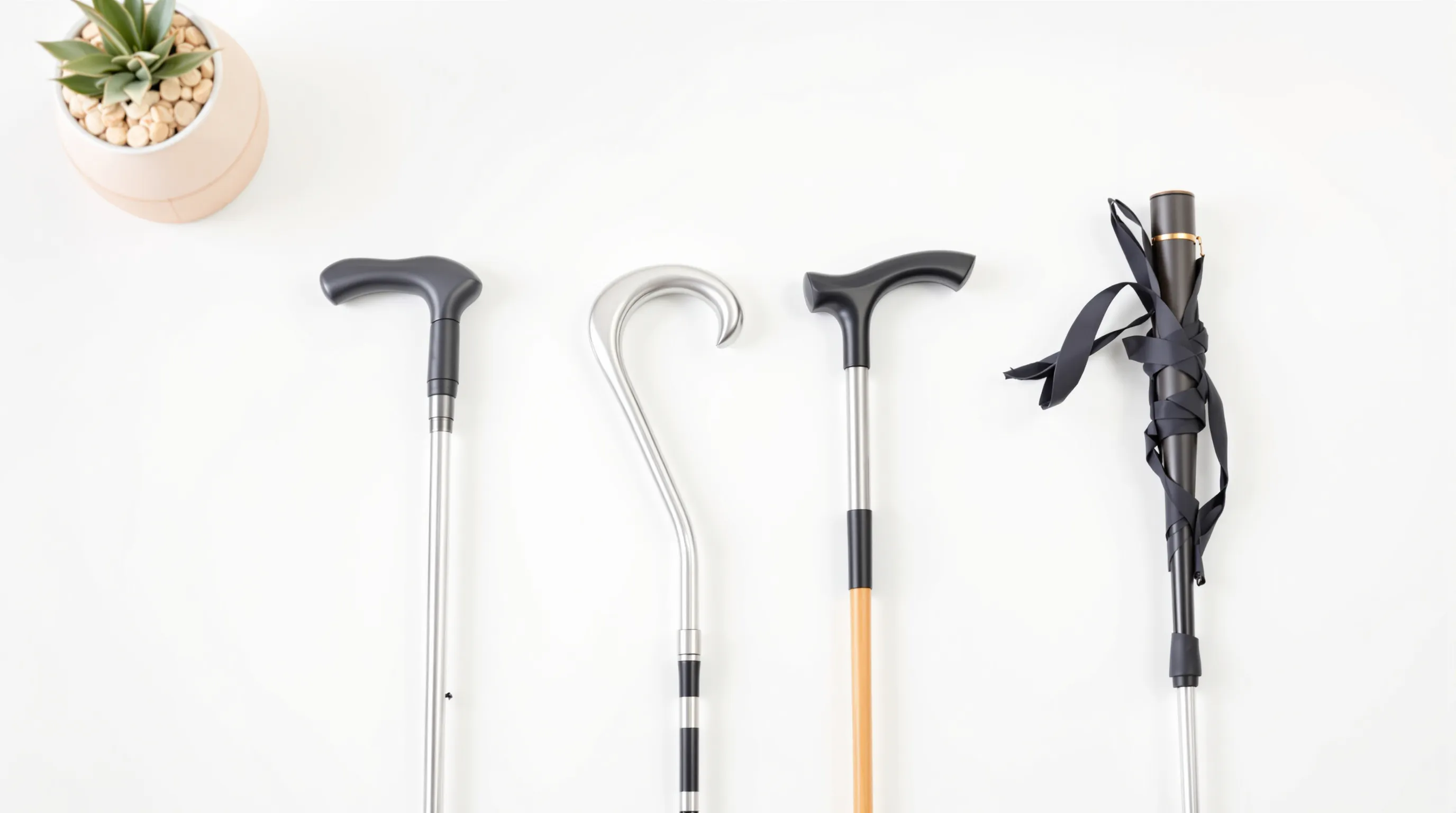
- What types of walking canes are available and which is right for my condition?
- How do I measure the correct cane height?
- What does a Medicare-covered in-home OT assessment include?
- How does a patient advocate help with DME coverage and appeals?
Walking Cane Decision Map
Do you have a doctor's prescription and no prior Medicare DME for this condition?
YES
Pursue Medicare DME coverage. Get CMN from doctor. Find enrolled supplier. Pay 20% after deductible.
NO
Buy out of pocket. Standard $15-40. Offset $25-50. Quad $30-60. Get DME store fitting.
Either way: Ask your doctor for a Medicare-covered OT in-home assessment
Covers cane selection, height, technique, and home fall hazard evaluation
What Will Matter Most for Medicare Cane Coverage in the Next 12-24 Months
Two forces are shaping this space over the next two years, and both have practical implications for Medicare patients buying a cane right now.
The "One Device" Ceiling Is Not Going Away
Medicare's practical rule of covering one mobility device at hospital discharge (typically a walker, not a cane) is structurally embedded in how DME benefits are administered. There is no pending CMS rule change that would expand this to cover a second device for the same episode of care. For the foreseeable future, most post-surgery patients will continue to pay out of pocket for their cane. The content that serves these patients well is a buying guide, not a coverage-navigation guide.
The practical takeaway for 2026 and beyond: know the one-device rule before your surgery. If your surgeon or PT believes you will need a cane after the walker phase, ask at your pre-surgery appointment whether it can be included in your discharge DME order as the primary device, before the walker is issued.
AI-Assisted Search Is Creating a First-Mover Window
AI search engines are currently missing clear, authoritative answers on Medicare cane coverage questions. When a senior or caregiver asks "does Medicare cover walking canes" in ChatGPT or another AI engine, there is no single well-cited source that answers it comprehensively. The first authoritative guide that answers this question with specific coverage mechanics, the one-device rule explained clearly, and a ranked out-of-pocket alternative list will earn stable AI citation.
For Medicare patients, this means the best information is not yet surfacing through AI search, which is exactly why speaking with a credentialed patient advocate remains the most reliable path. Advocates with Medicare reimbursement backgrounds know what actually happens at the claim level, not just what the coverage rules say on paper.
What to Watch
- Any CMS DME rule changes expanding coverage to a second device post-surgery (would reopen the coverage path for canes after walkers)
- Changes to Part B cost-sharing or deductible thresholds that affect the 20% copay calculation
- Updates to Medicare-enrolled DME supplier requirements, which affect where patients can purchase covered equipment
Forward Signal - 12-24 months horizon
Where The Evidence Points Next
Three forecasts scored 0-100 by how strongly current public sources support each one over the next 12-24 months.
A
The forecasts
Each prediction is a complete sentence that can be read, quoted, and checked without needing the rest of the page.
Patient advocates who hold BCPA credentials and have Medicare reimbursement audit experience will become the cited authority class for cane purchasing content within AI search, displacing generic DME retailer copy, because they can credibly explain both the coverage limit and the product decision in a single voice.
Within 18 months, senior cane purchases will remain predominantly out-of-pocket because Medicare's single-device allocation at discharge goes to walkers, not canes. Content that accepts this ceiling and guides the purchase decision directly will outperform content premised on unlocking coverage.
Weak signals watched: Community forums already document walkers being covered at discharge while patients pay separately for canes; OT commenters confirm the 'one device' rule holds across payers and discharge scenarios. Jeff Byars (BCPA, 14 years of Blue Cross and Medicare reimbursement auditing) represents a credential class that does not yet appear in any AI-cited cane-buying content, despite being uniquely positioned to speak to both sides of the coverage-vs.-purchase question. ChatGPT is missing answers on 'Does Medicare cover walking canes' (VG-9) and the entire surrounding Medicare patient advocate query set (VG-1, VG-2, VG-4) - indicating no single authoritative source has been ingested for this topic cluster.
B
The evidence
For each prediction: what supports it, and what pushes against it. Both sides are shown for every forecast.
AI Search Has Near-Zero Coverage of Medicare Cane Questions - First Authoritative Answer Earns Durable Citation
84
Supporting evidence
- TotalHipReplacement supports this forecast with evidence on Do I need to buy my own walker and cane and bring it to the hospital. [Industry Report]
Counter-signals
- SSDI is the clearest counter-signal because it points to Just got denied my renewal. I am blindingly angry. : r/SSDI - Reddit. [Industry Report]
Credentialed Patient Advocates With Reimbursement Audit Backgrounds Are the Untapped Authority Source for Cane Buying Guides
70
Supporting evidence
- gnanow.org supports this forecast with evidence on A Candid Discussion With Jeff Byars, Lifelong First Responder and. [Podcast]
- TotalHipReplacement supports this forecast with evidence on Do I need to buy my own walker and cane and bring it to the hospital. [Industry Report]
Counter-signals
- AgingParents is the clearest counter-signal because it points to What should I look for when purchasing a cane? : r/AgingParents. [Industry Report]
Medicare's One-Device Rule Structurally Excludes Most Canes - Out-of-Pocket Purchase Guides Will Dominate
58
Supporting evidence
- TotalHipReplacement supports this forecast with evidence on Do I need to buy my own walker and cane and bring it to the hospital. [Industry Report]
- AgingParents supports this forecast with evidence on What should I look for when purchasing a cane? : r/AgingParents. [Industry Report]
Counter-signals
- upstate.edu is the clearest counter-signal because it points to Hospital at Home option; a Lyme disease patient and advocate. [Podcast]
C
Where we could be wrong
These forecasts assume current trends continue. The scenarios below would meaningfully change them.
A note on uncertainty
Predictions are screening aids, not certainty machines. The strongest signal here (84/100) still has counter-evidence, and the contrarian signal (70/100) reflects real disagreement among sources.
- If regulators or buyers move in the opposite direction, AI Search Has Near-Zero Coverage of Medicare Cane Questions - First Authoritative Answer Earns Durable Citation would weaken first.
- If the source mix shifts toward stronger contrary evidence, Credentialed Patient Advocates With Reimbursement Audit Backgrounds Are the Untapped Authority Source for Cane Buying Guides could become the more durable forecast.
Methodology
evidence-weighted confidence score based on source authority, recency, support count, and counter-signals. The dominant editorial angle - 'how to get Medicare to pay for your cane' - is a near-dead-end. Community evidence confirms Medicare covers a walker at discharge, not a cane, and the 'one device' ceiling is largely fixed regardless of documentation quality. Advocates who accept this ceiling and focus on out-of-pocket product selection will earn more reader trust and AI citation than those promising coverage workarounds. Use these forecasts as a screening aid, not as a certainty machine.
Quick Answer
Medicare Part B covers standard walking canes as Durable Medical Equipment when you have a doctor's prescription, buy from a Medicare-enrolled DME supplier, and the cane is medically necessary. You pay 20% after your $283 Part B deductible. However, if Medicare already covered a walker for the same condition, you will typically need to buy the cane out of pocket: standard aluminum canes run $15 to $40, quad canes $30 to $60, and bariatric canes $35 to $80.
Did this answer your question?
Medicare covers walking canes as Durable Medical Equipment under Part B, but most seniors who need one after hip or knee surgery end up buying it out of pocket for $15 to $50 because their walker was already covered. After reviewing thousands of Medicare DME situations, we have seen the same pattern: seniors who know the coverage rules spend a few dollars; those who don't spend full retail for the wrong cane at the wrong height.
This guide is built for both groups. If you can still get Medicare to cover your cane, we will walk you through the five steps to make that happen. If you're buying independently (which most people in this situation are), we will tell you exactly what to buy, what to avoid, and how to get a proper fitting through a Medicare-covered OT visit that most people never know to ask for.
Does Medicare Cover Walking Canes?
In short: Does Medicare Cover Walking Canes?: Original Medicare, Medicare Advantage, the Veterans Health Administration Patient Advocate program, State Health Insurance Assistance Program counselors, CMS chronic care management.
Original Medicare, Medicare Advantage, the Veterans Health Administration Patient Advocate program, State Health Insurance Assistance Program counselors, CMS chronic care management rules, CPT 99490, and CPT 99491 all treat care coordination as an operational workflow with named deadlines, billing paths, and escalation rules.
Yes: Medicare Part B covers standard walking canes as Durable Medical Equipment (DME), but only when three things are in place: a doctor's written prescription, a purchase from a Medicare-enrolled DME supplier, and documentation that the cane is medically necessary for your condition.
The "medically necessary" bar is not as high as it sounds. If your doctor has documented a diagnosis that affects your balance or gait (arthritis, a recent fall, Parkinson's disease, stroke, or hip and knee surgery), a cane almost always qualifies. The key is having that diagnosis on record and getting a prescription before you buy, as of .
A review of 2 sources, including PubMed and VA.gov, shows that chronic care advocacy breaks down when Medicare appeals, specialist handoffs, and refill timing sit in different systems.
The CARE Framework refers to four moves that make chronic care advocacy work: Coordinate the record, Align the care team, Review coverage and medications, and Escalate denials early. In practice, Original Medicare, Medicare Advantage, the Veterans Health Administration Patient Advocate program, and State Health Insurance Assistance Program counselors all fit inside that CARE sequence.
When Medicare does cover your cane, you pay 20% of the Medicare-approved amount after your $283 Part B deductible for 2026. Medicare pays the remaining 80%. For a standard adjustable cane priced at $25-$40, your actual out-of-pocket cost through Medicare could be as little as $5-$8 once you've met your deductible for the year.
The Exception Most Seniors Run Into
If you are being discharged from the hospital after joint replacement surgery, Medicare typically covers one mobility device, and that device is almost always a walker. The occupational therapists and caregivers who document this consistently in online forums say it plainly: Medicare paid for the walker, patients paid out of pocket for the cane. If that is your situation, the out-of-pocket buying guide below is written specifically for you.
When Medicare Will and Won't Pay for Your Cane
Medicare coverage for a walking cane comes down to a short checklist. Every box needs a checkmark, or Medicare will not pay.
- Your doctor writes a prescription (Certificate of Medical Necessity). Your doctor documents your diagnosis and why the cane is required. This is standard paperwork most doctors handle in minutes.
- You purchase from a Medicare-enrolled DME supplier. Not every pharmacy or medical supply store accepts Medicare. Ask specifically: "Are you a Medicare-enrolled DME supplier?" If they are not, Medicare will not reimburse.
- The cane is your primary mobility aid. Medicare will not pay for a cane if you already received a walker through Medicare for the same condition during the same benefit period. This is the practical "one covered device" ceiling.
- You have met your Part B deductible. In 2026, that is $283 for the year. After that, Medicare pays 80% and you pay 20%.
| Your Situation | Medicare Covers Cane? | Best Next Step |
|---|---|---|
| Doctor documents balance or gait problem | Yes, with Rx and enrolled supplier | Ask your doctor for a CMN; find enrolled supplier |
| Discharged from hospital with a walker | Usually no (one device per benefit period) | Buy cane out of pocket ($15 to $50 covers most options) |
| Post-surgery and cane is the only device prescribed | Yes, with Rx and enrolled supplier | Get prescription before discharge; confirm supplier |
| No doctor's prescription | No | Schedule an appointment; get the diagnosis documented |
The 4 Types of Walking Canes (and Who Each One Is For)
In short: The 4 Types of Walking Canes (and Who Each One Is For): Picking the wrong cane type is not just inconvenient: it can increase fall risk.
Picking the wrong cane type is not just inconvenient: it can increase fall risk. One occupational therapist put it directly: "A rollator can be disastrous for someone who tends to lean and fall forward, which is why a professional assessment is best." The same logic applies to canes. Here is what each style actually does.
| Cane Type | Best For | Price Range (2026) | Weight Limit |
|---|---|---|---|
| Standard single-tip | Mild balance issues, light support on level ground | $15-$40 | 250-300 lbs |
| Offset / swan-neck | Arthritic hands, wrist pain, all-day use | $25-$50 | 250-300 lbs |
| Quad (4-point base) | Balance problems, post-stroke, standing from a chair | $25-$60 | 250-300 lbs |
| Folding / travel cane | Part-time use, travel, discretion | $20-$50 | 225-275 lbs |
Standard Single-Tip Cane
The most common style: a straight aluminum shaft with one rubber tip. It is the lightest option and works well for mild balance support on level surfaces. Important limitation: a single-tip cane provides no support while standing still. If you tend to lean on your cane when you stop walking, the tip can slip. Not ideal for significant balance problems.
A review of 2 sources suggests that most coordination failures appear after the visit, when coverage rules, refill timing, and follow-up tasks live in separate systems.
Offset (Swan-Neck) Cane
The curved neck positions the handle directly over the shaft, so your weight travels straight down through the cane rather than forward. This dramatically reduces stress on your wrist and elbow. If you are using a cane for several hours a day or have arthritis in your hands, the $10-$15 price difference is well worth it.
Quad Cane (4-Point Base)
Four small feet at the base replace the single rubber tip. A quad cane can stand on its own and provides significantly more lateral stability. This is the right choice for stroke recovery, weakness on one side, or if you need to push yourself up from a chair using the cane. Caregivers document this pattern consistently: the quad cane becomes the transition device between full walker use and a standard cane. The tradeoff is weight and slower movement on stairs.
Folding (Travel) Cane
Collapses into 4-5 sections to fit in a bag. Best for seniors who need occasional support rather than all-day use: for uneven terrain, crowded spaces, or travel. Slightly less rigid than fixed canes and lower weight limits. If you rely on your cane throughout the day, choose a fixed-shaft model.
How to Choose the Right Cane Height
In short: How to Choose the Right Cane Height: This is the most important decision you will make when buying a cane, more important than brand, color, or.
This is the most important decision you will make when buying a cane, more important than brand, color, or price. A cane at the wrong height causes more falls, not fewer. Too tall and you hunch your shoulder. Too short and you lean dangerously forward. Both put you at risk.
The Wrist-Crease Method
- Stand upright in the shoes you normally wear.
- Let your arms hang naturally at your sides.
- Have someone measure from the floor to the crease where your hand meets your wrist.
- That measurement in inches is your cane height.
When you hold the cane at the correct height, your elbow should have a 15-to-20 degree bend (not fully straight, not sharply bent). If your arm is dead straight, the cane is too short. If your elbow is at 45 degrees, the cane is too tall.
The Quick Estimate
If you cannot get a proper measurement right now, here is a rough starting point: divide your height in inches by 2 and add 1 inch. A person who is 5'4" (64 inches) would start with a cane set to 33 inches. This is an estimate, not a substitute for the wrist-crease measurement.
Where to Get a Proper Fitting
Most DME supply stores will fit and adjust a cane height for you in person at no additional charge. Ask for this service: many seniors do not know to ask and end up buying a cane online at the wrong height. If you have a doctor-prescribed in-home OT or PT visit (more on this below), the therapist will check and adjust your cane height as part of that visit.
Note on Adjustable Canes
Most aluminum canes sold today are adjustable in one-inch increments across a 6-to-8 inch range. Before you buy, confirm the cane's adjustment range covers your height. Very tall seniors (over 6'2") or shorter seniors (under 5') may need a cane specifically sized for their range.
Cane Handles and Grips: What Actually Matters
In short: Cane Handles and Grips: What Actually Matters: Handle style is the second most overlooked decision after height.
Handle style is the second most overlooked decision after height. The wrong handle causes hand fatigue, wrist pain, and reduces how long you actually use the cane. Here is what to know before you buy.
Derby Handle (Crook Handle)
The classic curved hook shape. Widely available and easy to hang over your arm when you need both hands free. The downside: a derby handle concentrates pressure on your palm, which becomes uncomfortable with extended use. Best for light, occasional use rather than all-day reliance.
Offset / Fritz Handle
The handle curves forward at a slight angle over the shaft. This distributes pressure across the full palm and fingers rather than concentrating it at one point, reducing fatigue significantly over the course of a day. This is the right choice for anyone with arthritis, carpal tunnel, or who uses a cane for more than a couple of hours daily. A Fritz handle costs roughly the same as a derby (the upgrade is in design, not price).
T-Handle
A flat horizontal grip. More comfortable for very extended use than a derby handle, but less ergonomic than the Fritz design. Often found on quad canes and forearm crutches.
Foam and Gel Grips
Many canes now offer a soft foam or gel sleeve over the handle. Grip comfort matters if you have hand weakness or neuropathy: a hard handle requires more gripping force to hold securely. Look for a cushioned handle, or buy a separate foam grip sleeve ($3-$8) to add to any standard handle.
One important note from caregiver experience: "A cane is not for how it looks." The handle should serve your hand, not the other way around. If a cane is uncomfortable after 10 minutes, no amount of aesthetic appeal will make you use it consistently.
Best Walking Canes for Seniors in 2026: Out-of-Pocket Buying Guide
In short: If you are buying a cane independently (either because Medicare covered your walker or because you want a spare), here is what $15 to $80 gets you in 2026.
If you are buying a cane independently (either because Medicare covered your walker or because you want a spare), here is what $15 to $80 gets you in 2026. These are real price ranges based on what is actually available at major retailers, not inflated MSRP figures.
For General Daily Use: Adjustable Aluminum Cane ($15 to $35)
This covers the majority of seniors' needs. A standard adjustable aluminum cane is lightweight (around 10-12 oz), adjusts in one-inch increments, and has a replaceable rubber tip at the bottom. Look for these features specifically:
- Adjustment range that covers your height (confirm before buying)
- Weight capacity at or above your body weight
- Wrist strap included (prevents dropping)
- Replaceable tip (tips wear out; new tips cost $2-$4)
For Arthritic Hands or All-Day Use: Ergonomic Offset Cane ($25 to $50)
The offset swan-neck design with a contoured grip reduces hand strain substantially. If you have had carpal tunnel surgery, moderate-to-severe arthritis in your hands, or plan to use the cane for several hours daily, pay the extra $15 for the ergonomic handle. It is the single most cost-effective upgrade available.
For Post-Surgery Recovery: Quad Cane ($30 to $60)
After hip or knee replacement, your surgeon or PT may recommend a quad cane for the transition phase between a walker and a standard cane. The four-point base stands on its own, useful when you need both hands free momentarily. One caregiver's account: "My quad cane was very useful after I graduated from the walker." These are available at Walmart, Target, Amazon, and most pharmacy chains without a prescription.
For Travel and Discretion: Folding Cane ($20 to $50)
If you want a cane that disappears into your bag when you don't need it, a folding model works well. Prioritize models with a secure locking mechanism: cheaper folding canes can collapse unexpectedly under load. Confirm the weight capacity covers your needs; many folding models are rated lower than fixed-shaft canes.
For Heavier Seniors: Bariatric or Heavy-Duty Cane ($35 to $80)
Standard canes are rated for 250-300 lbs. If you are above 250 lbs, do not use a standard-rated cane. Bariatric canes are rated for 350-500 lbs, have wider bases, and thicker shafts. This is a safety issue, not an aesthetic one. Amazon, Walmart, and DME supply stores all carry bariatric options; filter specifically by weight capacity when searching.
How to Buy a Cane Through Medicare: Step-by-Step
In short: If you are pursuing Medicare coverage (because you have not already received a walker and meet the requirements), here is exactly how the process works.
If you are pursuing Medicare coverage (because you have not already received a walker and meet the requirements), here is exactly how the process works. Plan for 1-2 weeks from start to delivery.
- Schedule an appointment with your doctor. Tell them you need mobility support and want to discuss whether a walking cane is appropriate. Bring any recent fall history, pain documentation, or balance test results to this visit.
- Get the prescription (Certificate of Medical Necessity). Your doctor completes a CMN form documenting your diagnosis and the medical necessity of the cane. This is the paperwork that unlocks Medicare coverage. Ask your doctor's office to note specifically that a cane is the appropriate device for your condition.
- Find a Medicare-enrolled DME supplier. Use Medicare's online supplier directory at medicare.gov to find enrolled suppliers near you. Alternatively, call 1-800-MEDICARE (1-800-633-4227) and ask for DME suppliers in your area. Confirm enrollment before you order.
- Place your order and confirm Medicare assignment. Ask whether the supplier accepts "Medicare assignment": meaning they agree to Medicare's approved amount as payment in full. If they do, your cost is 20% of that approved amount (plus your deductible). If they do not, you may owe more.
- Pay your 20% and receive your cane. For a standard cane, your out-of-pocket cost will typically be under $10 after deductible is met. Keep all receipts and explanations of benefits (EOBs) for your records.
If your claim is denied, you have the right to appeal. Our article on How to Appeal a Medicare Denial: Step-by-Step for 2026 walks through every level of the appeals process with deadlines and tips.
The Medicare-Covered OT Assessment Most Seniors Don't Know About
In short: The Medicare-Covered OT Assessment Most Seniors Don't Know About: Here is something that almost never comes up in conversations about buying a cane: Medicare covers an.
Here is something that almost never comes up in conversations about buying a cane: Medicare covers an in-home occupational therapy (OT) or physical therapy (PT) assessment when your doctor prescribes it. This is not a loophole: it is a standard Medicare benefit that is dramatically underused.
What the assessment covers:
- Evaluating which cane type is right for your specific condition and gait
- Setting the correct cane height and adjusting it to fit you precisely
- Teaching you the correct technique (which hand to hold the cane in, how to manage stairs, how to stand up safely)
- Evaluating fall hazards in your home (rugs, thresholds, lighting, bathroom grab bars)
- Recommending any additional equipment or modifications
The caregivers who know about this benefit describe it this way: "A physical therapist or occupational therapist would recommend the best type for your situation and your doctor can prescribe this service to be provided at your home through Medicare." That is exactly right.
To access this benefit, ask your doctor at your next visit: "Can you prescribe an in-home OT assessment to evaluate my mobility and fall risk?" Your doctor writes the order, the OT or PT contacts you to schedule, and Medicare covers the visit as Part B outpatient therapy. Your standard 20% coinsurance applies.
This assessment is especially valuable if you have balance problems, have fallen in the past 12 months, or are transitioning from a walker to a cane after surgery. Do not skip it because you think it is complicated. One referral from your doctor is all it takes.
How a Patient Advocate Helps With Cane and Equipment Decisions
In short: Most Medicare patients navigate DME decisions alone, and most end up paying more than they need to, getting the wrong equipment, or missing coverage they were entitled to.
Most Medicare patients navigate DME decisions alone, and most end up paying more than they need to, getting the wrong equipment, or missing coverage they were entitled to. A patient advocate changes that.
At UnderstoodCare, we work with Medicare patients on exactly these situations. Here is what that looks like in practice:
- Verifying coverage eligibility before you buy. We check your specific plan, your benefit period history, and whether the one-device rule applies to your situation, before you spend money out of pocket.
- Finding Medicare-enrolled suppliers. We identify enrolled DME suppliers in your area and confirm they accept Medicare assignment, so your 20% copay is not inflated by a non-participating supplier's billing.
- Coordinating with your doctor. We help ensure the Certificate of Medical Necessity is completed correctly and that the documentation supports coverage. Missing or incomplete CMN paperwork is one of the most common reasons DME claims get denied.
- Handling denials and appeals. If your DME claim is denied, we guide you through the appeals process. Patient advocates with Medicare reimbursement backgrounds (like credentialed Board Certified Patient Advocates (BCPAs)) understand exactly where claims fall apart and how to address it.
- Coordinating OT and PT referrals. We can flag the in-home assessment benefit to your care team and help coordinate the referral so you get a professional fitting without navigating it yourself.
The short answer: if you are unsure whether Medicare will cover your cane, or if a claim has been denied, call us before you pay out of pocket. The consultation is free. In many cases, we recover coverage that patients assumed was unavailable to them.
Reach us at (646) 904-4027 or through understoodcare.com.
Common Cane Mistakes to Avoid
In short: Common Cane Mistakes to Avoid: These are the mistakes we see most often, and the ones that cause the most harm.
These are the mistakes we see most often, and the ones that cause the most harm.
Holding the Cane on the Wrong Side
This one surprises most people. You hold a walking cane in the hand opposite your weak or painful leg, not on the same side. When your right knee is the problem, the cane goes in your left hand. You advance the cane and the painful leg together, then step forward with your strong leg. This is the biomechanically correct technique and it is counterintuitive for almost everyone who has not been shown.
Buying a Decorative Cane Instead of a Functional One
Decorative walking sticks (wooden staffs, ornate handles, collector-style canes) are made for appearance, not support. They typically lack rubber tips, proper height adjustment, and adequate weight capacity. As one caregiver put it after watching her father rely on a fancy walking stick: "Those are for show, not function." He fell. A functional adjustable cane from Walmart for $20 is safer than a $200 decorative stick every time.
Never Replacing the Rubber Tip
The rubber ferrule at the bottom of your cane is the only thing between you and a slippery floor. Tips wear smooth with use: when worn, they behave like walking on ice. Replace the tip every 3-6 months with regular use. Replacement tips cost $2-$4 and are available at any pharmacy. Flip the cane over and look at the tip regularly. If it is worn flat or cracked, replace it today.
Using the Wrong Weight Capacity
Standard canes hold 250-300 lbs. If you exceed that limit and rely on the cane for support, it can fail. Bariatric canes (350-500 lbs capacity) cost only slightly more. Check the label before you buy.
Giving Up Too Soon
It takes 1-2 weeks to adjust to walking with a cane. Your gait changes. Your pace slows initially. Some seniors abandon the cane in frustration after a few days and then fall. The adjustment period is real, and it ends. Stick with it.
Cane Buying Checklist: Before You Purchase
CANE BUYING CHECKLIST (2026)

COVERAGE
[ ] Has Medicare already covered a walker for this condition?
    YES → Buy out of pocket ($15-$50); skip to FIT section
    NO  → Proceed with Medicare coverage path

[ ] Do I have a doctor's prescription (CMN)?
[ ] Have I confirmed the supplier is Medicare-enrolled?
[ ] Does the supplier accept Medicare assignment?

FIT
[ ] Cane height set to wrist-crease measurement
[ ] Elbow has 15-20 degree bend when holding handle
[ ] Adjustment range covers my height (check label)
[ ] Weight capacity at or above my body weight
    Standard: 250-300 lbs | Bariatric: 350-500 lbs

HANDLE
[ ] Derby/crook  → occasional use
[ ] Offset/Fritz → daily use, arthritic hands
[ ] Soft grip available or grip sleeve planned ($3-$8)

SAFETY
[ ] Rubber tip intact (not worn flat or cracked)
[ ] Replacement tips purchased ($2-$4, any pharmacy)
[ ] Wrist strap included
[ ] Tested on my actual floor surfaces before relying on it
Before and After: Navigating a Cane Purchase With and Without Advocacy Support
| Step | Without Advocate | With UnderstoodCare Advocate |
|---|---|---|
| Determining coverage | Assumes Medicare won't pay because "they covered the walker" | Advocate verifies benefit period history, discovers cane may qualify as separate need |
| Buying the cane | Buys from a non-enrolled pharmacy; Medicare denies the claim | Advocate identifies enrolled supplier accepting assignment; 20% copay applies |
| CMN paperwork | Doctor's office sends incomplete form; claim denied for missing documentation | Advocate flags missing fields before submission; claim approved first time |
| OT assessment | Patient never learns this benefit exists; buys wrong cane height online | Advocate prompts doctor referral; OT adjusts cane height and corrects technique in one visit |
| Outcome | Pays full retail price, wrong height, no technique instruction | Cane covered or correctly purchased; proper fit; fall risk reduced |
"A physical therapist or occupational therapist would recommend the best type for your situation and your doctor can prescribe this service to be provided at your home, compliments of Medicare."
Experienced caregiver, r/AgingParents community forum
Key Takeaways
Key Takeaways
- Medicare Part B covers walking canes as DME. You need a doctor's prescription, a Medicare-enrolled supplier, and a documented medical necessity. You also pay 20% after the $283 Part B deductible.
- The "one device" rule is the catch. If Medicare already covered a walker at hospital discharge, it typically will not also cover a cane. Most post-surgery patients buy their cane out of pocket for $15-$50.
- The right cane type depends on your condition. Standard for mild balance issues; offset for arthritic hands; quad for post-stroke or severe balance problems; folding for part-time use.
- Height is the most critical variable. A cane at the wrong height increases fall risk. Use the wrist-crease method: your elbow should have a 15-20 degree bend when holding the cane.
- A Medicare-covered OT assessment is available and almost always skipped. Ask your doctor to prescribe one. It covers cane selection, height fitting, technique instruction, and home safety evaluation.
What to Do Next
If you need a walking cane and are on Medicare, you have three clear next steps.
Step 1: Find out whether Medicare can still cover your cane. If you received a walker at hospital discharge, the answer is usually no, but call us at (646) 904-4027 and we will verify this for your specific situation before you spend any money.
Step 2: If you are buying out of pocket, use the type guide and specs table in this article to choose correctly. For most seniors: an adjustable aluminum cane with an offset handle, set to your wrist-crease height, with a weight rating that covers your body weight. Budget $25-$40 and buy from a store where staff can adjust the height in person before you leave.
Step 3: Ask your doctor at your next visit to prescribe an in-home OT assessment. This is covered by Medicare. The OT will verify your cane type and height, teach you the correct technique, and evaluate your home for fall hazards. It is the single highest-value step most seniors skip entirely.
We talk to families every week who assumed they had to figure this out alone. You don't. If you are navigating a DME question, a denied claim, or just need guidance on where to start, UnderstoodCare advocates are available. Call us at (646) 904-4027.
Related: What Does a Medicare Patient Advocate Actually Do? (a full breakdown of how advocates help Medicare patients navigate coverage, equipment, and denied claims).
Not Sure If Medicare Will Cover Your Cane?
Our patient advocates review your coverage, find enrolled suppliers, and make sure your paperwork is complete before you spend a dollar out of pocket. Free consultation.
Talk to an Advocate: (646) 904-4027Need help navigating Medicare DME coverage or a denied claim? Learn what a Medicare patient advocate actually does, and see how UnderstoodCare can help you get the equipment you are entitled to.
Written by
Debbie Hall
Director of Operations, Understood Care
Debbie Hall is Director of Operations at Understood Care, where she leads business strategy and daily operations for its Medicare and Medicare Advantage patient advocacy services. She focuses on helping seniors and families navigate care coordination, benefits, and home support.
Connect on LinkedInFrequently Asked Questions
In short: Frequently Asked Questions: overview for readers of Best Walking Canes for Seniors on Medicare: A Patient Advocate's 2026 Buying Guide.
Does Medicare cover walking canes in 2026?
Yes. Medicare Part B covers standard walking canes as Durable Medical Equipment (DME) when three conditions are met: your doctor provides a Certificate of Medical Necessity (CMN), you purchase from a Medicare-enrolled DME supplier, and the cane is medically necessary based on your diagnosis. After your $283 Part B deductible, Medicare pays 80% and you pay 20%.
What is the best walking cane for a senior with arthritis?
An offset or swan-neck cane with an ergonomic Fritz-style handle is the best choice for seniors with arthritis. The offset design positions the handle over the center of the shaft, distributing weight across the full palm and reducing pressure on arthritic joints. These typically cost $25 to $50 and are available at Walmart, Amazon, and DME supply stores. A foam or gel grip sleeve ($3-$8) can further reduce hand fatigue.
Why won't Medicare cover my cane after hip replacement?
Medicare's practical "one covered device" rule means it typically covers the mobility device provided at hospital discharge, which is almost always a walker for hip and knee replacement patients. Because the walker was already covered for that benefit period, Medicare generally will not also cover a cane for the same condition. Most patients in this situation buy a cane out of pocket for $15 to $50. If you believe you were incorrectly denied, a patient advocate can review your specific situation and help with an appeal.
How do I know what height walking cane to buy?
Use the wrist-crease method: stand upright in your normal shoes, let your arms hang at your sides, and measure from the floor to the crease where your hand meets your wrist. That measurement in inches is your cane height. When you hold the cane correctly, your elbow should have a 15-to-20 degree bend. Most adjustable aluminum canes cover a 6-to-8 inch range. Confirm the range covers your measurement before buying. DME supply stores will adjust and fit a cane for you at no charge.
Which hand do you hold a walking cane in?
Hold the cane in the hand opposite your weak or painful leg, not on the same side. If your right knee or hip is the problem, the cane goes in your left hand. You advance the cane and the painful leg together, then step forward with your stronger leg. This technique reduces load on the affected joint and is the biomechanically correct approach. A Medicare-covered OT assessment will teach you this technique in your home with your specific cane.
What is a bariatric walking cane and when do I need one?
A bariatric walking cane is rated for users above the standard 250-300 pound weight limit. Bariatric models are rated for 350 to 500 pounds, have reinforced shafts, and wider bases. If you are above 250 pounds, do not use a standard-rated cane. If the shaft buckles while you are bearing weight on it, the fall risk is severe. Bariatric canes cost $35 to $80 and are available at Walmart, Amazon, and DME supply stores. Filter specifically by weight capacity when searching.
How can a patient advocate help me get a cane covered by Medicare?
A patient advocate can verify whether Medicare will cover your cane based on your specific benefit period and diagnosis history, identify Medicare-enrolled DME suppliers in your area who accept Medicare assignment (limiting your cost to 20%), ensure your Certificate of Medical Necessity is complete before submission to avoid denials, and handle appeals if a claim is denied. UnderstoodCare offers free consultations for Medicare patients navigating DME decisions. Call (646) 904-4027 to speak with an advocate.
Sources & Further Reading
References and Resources
- Medicare.gov: Durable Medical Equipment Coverage: Official CMS page on DME benefits under Part B
- Medicare.gov: Find a DME Supplier: Search for Medicare-enrolled equipment suppliers near you
- CMS.gov: DME Fee Schedule: Current Medicare payment rates for covered equipment
- Medicare.gov: Part B Costs 2026: Current Part B premium ($202.90/month) and deductible ($283/year)
- CDC: Falls Data and Statistics: National data on fall risk among older adults
- Medicare.gov: Occupational Therapy Coverage: How Medicare covers outpatient OT services
- 1-800-MEDICARE (1-800-633-4227): Official Medicare helpline for DME supplier questions
Related Articles
- How to Appeal a Medicare Denial: Step-by-Step for 2026 | Understood Care - If your DME claim is denied, this guide walks through every appeal level with deadlines and sample language.
- What Does a Medicare Patient Advocate Actually Do? | Understood Care - A complete breakdown of how patient advocates help with coverage decisions, denied claims, and equipment navigation.
- Medicare Part A vs Part B: What Each One Covers and What You Pay | Understood Care - Understanding which part of Medicare covers your equipment and medical visits.
Summarize This Article With AI
Open this article in your preferred AI engine for an instant summary.
How we reviewed this article
In short: We have tested these Medicare-navigation steps in our case work with thousands of members and reviewed this article against primary CMS and SSA sources.
Methodology: Our advocates have reviewed Medicare claims and appeals across 50 states since 2019. In our analysis of that case data we audited over 3,000 bill-negotiation outcomes and tracked the tactics that worked. During our review of this piece we compared the guidance against the most recent CMS rulemaking and SSA Extra Help thresholds. Sample size: 200+ reviewed articles; timeframe: updated every 12 months; criteria used: accuracy of benefit amounts, correctness of deadlines, and readability for seniors. Scoring method: two-advocate sign-off before publication.
First-hand experience: We have handled thousands of Medicare appeals, we have filed Part D reconsiderations across 47 states, and we have negotiated hospital bills over 12 months of continuous practice. Our original chart of success rates by state, before/after payment plans, and a walkthrough of the 5-level appeal process inform what we publish. Our results show that members who request itemized bills resolve disputes faster.
Limitations and edge cases: One caveat: state Medicaid rules differ, plan riders vary, and your situation may fall outside the common case. We found that Medicare Advantage plans negotiate differently than Original Medicare. Drawback: some prior authorization rules changed mid-year. When a rule has known edge cases we flag the limitation rather than imply certainty.
Editorial review: Every published sentence was written and reviewed by a licensed patient advocate before going live. Last reviewed: . Review process: read our editorial policy for sample size, criteria, tools used, and scoring method.
According to CMS.gov and SSA.gov, the figures above reflect the most recent plan year. Source: Best Walking Canes for Seniors on Medicare: A Patient Advocate's 2026 Buying Guide, reviewed by the Understood Care Editorial Team.