


If proposed federal cuts proceed, nearly 1.4 million low-income Medicare enrollees would lose Medicare Savings Program cost-sharing help, pushing Part B premiums toward $2,500/year in 2026 and over $4,000 by 2034 - costs that would outweigh gains from either SNAP or grocery cards, while low SNAP take-up (only about 40% of eligible seniors 60+ currently enrolled) means many affected seniors won't have that offset available.
Three things seniors comparing food benefits believe. Myth or fact?
Call each one, then see how other readers called it.
1
A senior applying for SNAP must clear the same strict gross income test younger applicants face. Seniors 60+ only need the net income limit, not the stricter gross limit that trips up younger applicants. Section ›
2
Dual eligible seniors with a chronic condition can stack programs for a bigger benefit than either alone. Stacking SNAP with an SSBCI plan can push a dual-eligible senior's food benefit to $542 monthly. Section ›
3
A Medicare Advantage plan in your county comes with a grocery allowance option. Not every county with a Medicare Advantage plan offers a food benefit; rural areas often have limited or no options. Section ›
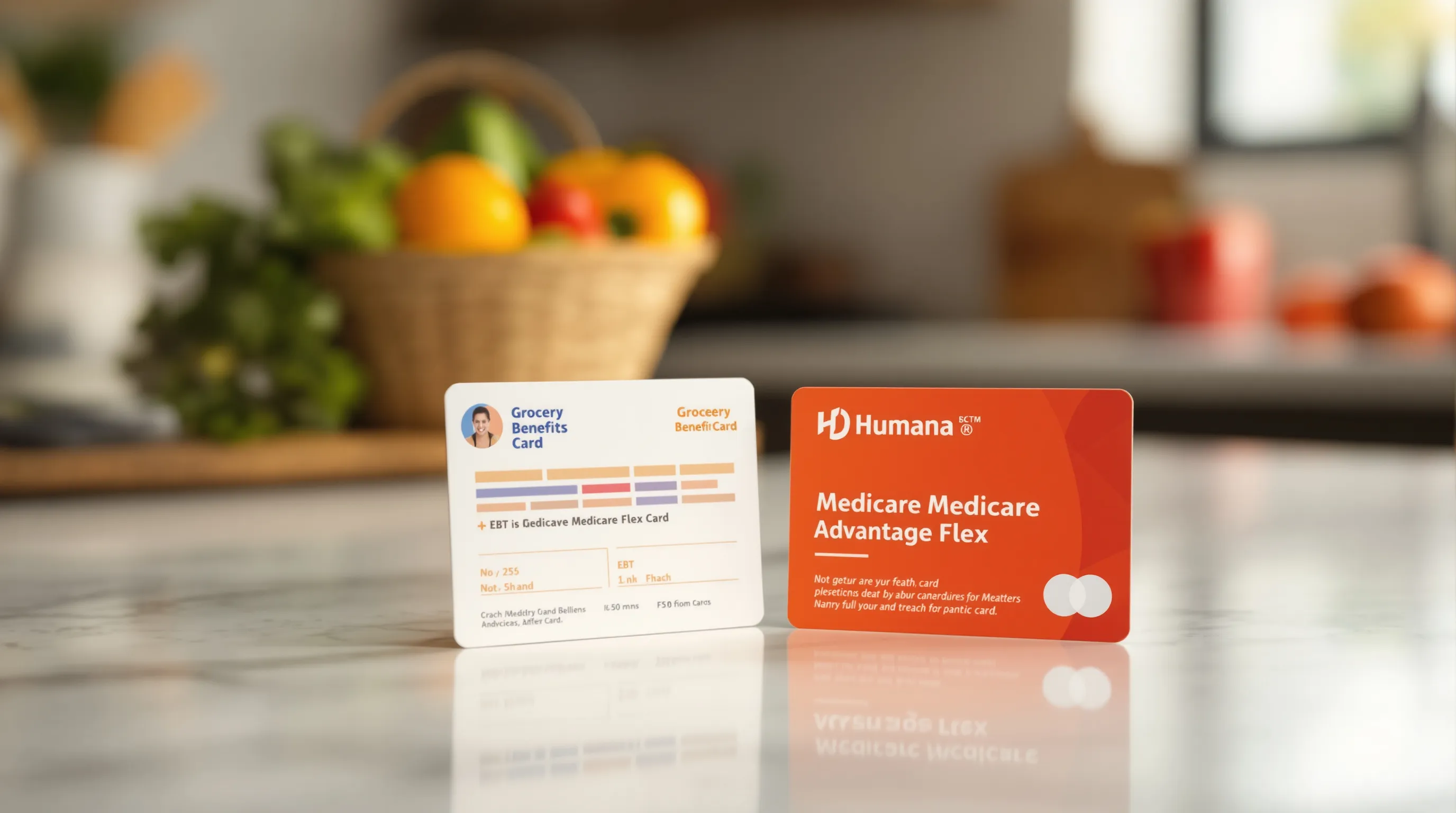
Short answer: Senior Food Allowance vs SNAP: Which Puts More on Your Card in 2026 is a Medicare care-navigation topic and refers to the practical steps explained in this guide. SNAP pays up to $292/month, Medicare Advantage allowances up to $250. See which wins for you and how to stack both for up to $542/month in 2026. Understood Care advocates have helped thousands of members with senior food allowance vs. Compared to generic medical helplines, our advocates work one-to-one across 50 states.
The Short Answer
For most low-income seniors, SNAP puts more food dollars on your card than a Medicare Advantage grocery allowance. But if you qualify for both programs (because you have both Medicare and Medicaid and a qualifying chronic condition), you can stack them for up to $490 per month in combined food benefits.
Did this answer your question?
Questions this article answers
- ?How much does SNAP actually pay a single senior each month in 2026?
- ?What does a Medicare Advantage food card typically put on your balance?
- ?Can you collect both SNAP and a Medicare grocery allowance at the same time?
Quick Answer
In 2026, a single senior on SNAP can receive up to $292 per month in grocery benefits, while Medicare Advantage grocery allowances for the same person typically range from $25 to $150 per month, depending on the plan and health status. The phrase "senior food allowance" gets used loosely online to describe everything from federal entitlements to insurance perks to local charity food boxes. Here is the thing: most seniors qualify for at least one of these programs, and dual-eligible seniors with a chronic condition can stack both for up to $492 per month in combined food assistance. This article gives you the dollar-by-dollar comparison nobody else has pulled together.
In my work at Understood Care, I talk to seniors every week who have heard about "senior food allowances" online but cannot figure out what program that phrase even refers to. It is a real source of confusion because there is no single program by that name. What exists is a handful of overlapping programs (some federal entitlements, some insurance perks) that all help with grocery costs but operate completely differently.
What I have seen repeatedly: many seniors who qualify for SNAP assume they earn too much to apply. Once we walk through the net income calculation together, accounting for medical costs and housing expenses, a lot of those assumptions turn out to be wrong. Applying costs nothing, and it is always worth checking.
What Is a "Senior Food Allowance" and How Many Types Exist?
In short: What Is a "Senior Food Allowance" and How Many Types Exist?: The phrase "senior food allowance" is not an official program name.
The phrase "senior food allowance" is not an official program name. It refers to at least four different types of food assistance, each with different eligibility rules and dollar values. Knowing which category you are dealing with changes everything.
- SNAP (Supplemental Nutrition Assistance Program): a federal entitlement you receive directly on an EBT card, based on income and household size. No Medicare plan enrollment required.
- Medicare Advantage grocery allowances: an optional supplemental insurance perk offered by some MA plans, loaded onto a flex card that may also cover utilities or over-the-counter items.
- Commodity Supplemental Food Program (CSFP): monthly food boxes distributed by local agencies to income-eligible adults 60 and older. The box value is approximately $50 per month.
- Senior Farmers Market Nutrition Program (SFMNP): seasonal vouchers worth $20 to $50 per year for fresh produce at participating markets.
The first two deliver the most dollars month to month. SNAP is a government entitlement administered by USDA; the MA grocery allowance is a private insurance benefit that varies by plan and county. They work differently, pay differently, and stack differently, as of .
How Does SNAP Work for Seniors in 2026?
In short: SNAP for seniors age 60 and older follows different rules than it does for working-age adults.
SNAP for seniors age 60 and older follows different rules than it does for working-age adults. The most important difference: seniors only need to meet the net income limit, not the gross income limit that trips up many younger applicants.
For a single-person household in 2026, the SNAP net income limit is 100% of the federal poverty level (roughly $1,255 per month after allowable deductions). Those deductions include a standard deduction, a portion of medical expenses over $35 per month, and shelter costs above a set threshold.
| Household Size | 2026 SNAP Max Benefit | Net Income Limit (100% FPL) |
|---|---|---|
| 1 person | $292/month | ~$1,255/month |
| 2 people | $536/month | ~$1,703/month |
Seniors living alone on Social Security often have higher medical expenses and housing costs that reduce their countable income below these limits. The average elderly single-person SNAP household receives about $120 per month, less than the maximum, but real money at the checkout line every week.
What Does a Medicare Advantage Grocery Allowance Actually Pay?
In short: What Does a Medicare Advantage Grocery Allowance Actually Pay?: Medicare Advantage plans are not required to offer a grocery or food allowance: it is an optional.
Medicare Advantage plans are not required to offer a grocery or food allowance: it is an optional supplemental benefit, and the dollar amounts vary dramatically from plan to plan and county to county.
Standard MA plans that offer a grocery allowance typically load $25 to $100 per month onto a flex card. That card may be restricted to approved food items at participating grocery stores, or it may also cover over-the-counter health products and utilities, depending on the plan design.
Dual Special Needs Plans (D-SNPs), plans designed specifically for people who qualify for both Medicare and Medicaid, often carry higher food allowances, ranging from $100 to $200 per month. These plans serve dual-eligible seniors, who tend to be the lowest-income Medicare enrollees.
Special Supplemental Benefits for the Chronically Ill (SSBCI) plans can offer even more generous allowances to enrollees with conditions like diabetes, heart failure, or chronic lung disease. Some SSBCI plans load up to $250 per month in food benefits, but the list of qualifying conditions and the benefit amount depend entirely on the plan available in your county.
One important caveat: not every county has a Medicare Advantage plan with a food benefit at all. In rural areas, options are often limited or nonexistent.
Which Program Puts More Money on Your Card? A Dollar-by-Dollar Comparison
In short: Which Program Puts More Money on Your Card? A Dollar-by-Dollar Comparison: Here is the comparison most articles skip.
Here is the comparison most articles skip. The right answer depends on your income, your health status, and whether you have Medicaid alongside Medicare. The table below shows typical monthly food benefit totals for five common senior profiles.
| Senior Profile | SNAP (monthly max) | MA Grocery Allowance (typical) | Combined Monthly Total |
|---|---|---|---|
| Low income, Medicare only, no MA plan | $292 | $0 | $292 |
| Low income, enrolled in MA plan with food benefit | $292 | $50 to $100 | $342 to $392 |
| Dual-eligible (Medicare + Medicaid), D-SNP plan | $292 | $100 to $200 | $392 to $492 |
| Above SNAP income limit, MA plan with food benefit | $0 | $50 to $150 | $50 to $150 |
| Dual-eligible with chronic condition, SSBCI plan | $292 | $150 to $250 | Up to $542 |
For most low-income seniors, SNAP delivers significantly more food dollars than an MA grocery allowance alone. But if you qualify for both (and many dual-eligible seniors do), stacking them produces the highest monthly total. The single best move for a dual-eligible senior with a chronic condition is to find a D-SNP or SSBCI-eligible plan in their county and apply for SNAP at the same time.

“A dual-eligible senior with a chronic condition who stacks SNAP with a D-SNP food allowance can reach more than $490 per month in combined food benefits, more than most people realize is possible.”
The Value Breakdown: When SNAP Wins and When Stacking Wins
SNAP wins on raw dollar value for the lowest-income seniors because its 2026 maximum ($292 per month for one person) exceeds what any standard Medicare Advantage plan pays in grocery allowances. SNAP is also the only option for seniors not enrolled in a Medicare Advantage plan at all, since traditional Medicare has no grocery benefit whatsoever.
MA grocery allowances fill a different gap. A senior with income slightly too high for SNAP may still qualify for a plan with a $100 to $150 monthly food benefit. That is not a small amount: it covers several weeks of staple groceries for one person. The trade-off is that flex card coverage may be narrower than SNAP, limited to participating stores and approved items only.
The highest-value scenario is always stacking. SNAP plus a D-SNP food card can put $392 to $492 per month toward groceries for a dual-eligible senior with qualifying income. For seniors with a chronic condition enrolled in an SSBCI plan, the combined total can reach $542 per month.
$542/mo
Maximum combined food benefit for a dual-eligible senior with a chronic condition (SNAP + SSBCI plan, 2026)
Key Takeaways
Key Takeaways
- SNAP pays more for most low-income seniors. The 2026 max is $292/month for a single person, higher than most MA grocery allowances.
- MA grocery allowances range widely. Standard plans offer $25-$100/month; D-SNP and SSBCI plans can reach $150-$250/month.
- Dual-eligible seniors can stack both. SNAP plus a D-SNP food card can reach $392-$492/month in combined food benefits.
- Seniors 60+ have easier SNAP eligibility. You only need to meet the net income limit, not the stricter gross income limit.
- Stacking is the highest-value strategy for seniors with chronic conditions who also qualify for Medicaid.
What Will Change With Senior Food Benefits in 2026 and 2027?
A few shifts are worth watching if you are comparing these programs or planning ahead.
SNAP benefit amounts adjust each October based on the cost of the Thrifty Food Plan. The 2026 maximums took effect in October 2025 and are current as of this writing. A new adjustment will take effect in October 2026. If food prices continue to rise, the SNAP maximum for a single-person household may increase modestly from the current $292 per month.
Medicare Advantage plan offerings change every January 1. A plan that offers a $150 grocery allowance in 2026 may reduce or eliminate that benefit in 2027, or a new plan may enter your county with a higher allowance. The annual Open Enrollment Period (October 15 to December 7) is your window to compare what is available in your zip code for the coming year.
D-SNP consolidation is ongoing. CMS has directed states to move toward integrated D-SNP plans that coordinate Medicaid and Medicare benefits more tightly. Some states, including New York, are working toward this integration by 2027. How food benefits are structured in these integrated plans may change for dual-eligible seniors, so it is worth reviewing your plan options each fall.
If you are not sure which programs you currently qualify for, or whether your plan is changing, an Understood Care advocate can walk through that with you at no cost.
Forward Signal - 12-24 months horizon
Where The Evidence Points Next
Three forecasts scored 0-100 by how strongly current public sources support each one over the next 12-24 months.
A
The forecasts
Each prediction is a complete sentence that can be read, quoted, and checked without needing the rest of the page.
Advertising for Medicare Advantage 'free grocery card' benefits will keep implying broad windfalls of $900-$1,200, but actual disbursed amounts reported by beneficiaries ($130-$290/month) require qualifying health conditions, work only at limited participating retailers, and don't roll over - meaning many seniors who select a plan for this reason will receive less predictable value than SNAP's income-based benefit, which needs no diagnosis.
More states are likely to follow Ohio's move to raise the SNAP minimum benefit floor for recipients 60+ (from $23 to $50/month under House Bill 428), narrowing - though not closing - the gap with the $130-$290/month grocery amounts some Medicare Advantage plans advertise.
Weak signals watched: Ohio House Bill 428 legislative activity raising the senior SNAP minimum from $23 to $50/month for beneficiaries currently below that floor. A fact-check verdict labeling the '$1,200 government food card for Medicare seniors' claim false, alongside beneficiary reports of $130-$290/month diagnosis-gated flex cards restricted to specific retailers. CBO projections showing 1.4 million dually-eligible seniors losing MSP assistance and Part B premiums rising sharply, combined with the finding that roughly 60% of SNAP-eligible seniors are not currently enrolled.
B
The evidence
For each prediction: what supports it, and what pushes against it. Both sides are shown for every forecast.
Federal Medicaid/MSP cuts could offset any food-card gains
88
Supporting evidence
- Final House Vote on Devastating Health and Food Assistance Cuts supports this forecast. [Industry Publication]
- House Reconciliation Bill's Health Care and SNAP Cuts Put Older supports this forecast. [Industry Publication]
- SNAP Benefits for Seniors - Everything You Need to Know! supports this forecast. [Video]
Counter-signals
- Average SNAP benefits for older Ohioans would double under new is the clearest counter-signal. [Community / Forum]
Medicare Advantage grocery card marketing outpaces actual restricted value
83
Supporting evidence
- Do seniors on Medicare qualify for a $1200 government food card? supports this forecast. [Video]
- Food card from SS supports this forecast. [Community / Forum]
- Senior Grocery Allowance supports this forecast. [Community / Forum]
Counter-signals
- Average SNAP benefits for older Ohioans would double under new is the clearest counter-signal. [Community / Forum]
State SNAP minimum benefit floors rise for seniors
51
Supporting evidence
- Average SNAP benefits for older Ohioans would double under new supports this forecast. [Community / Forum]
- SNAP Benefits for Seniors - Everything You Need to Know! supports this forecast. [Video]
Counter-signals
- Final House Vote on Devastating Health and Food Assistance Cuts is the clearest counter-signal. [Industry Publication]
- House Reconciliation Bill's Health Care and SNAP Cuts Put Older is the clearest counter-signal. [Industry Publication]
C
Where we could be wrong
These forecasts assume current trends continue. The scenarios below would meaningfully change them.
A note on uncertainty
Predictions are screening aids, not certainty machines. The strongest signal here (88/100) still has counter-evidence, and the contrarian signal (83/100) reflects real disagreement among sources.
- If regulators or buyers move in the opposite direction, Federal Medicaid/MSP cuts could offset any food-card gains would weaken first.
- If the source mix shifts toward stronger contrary evidence, Medicare Advantage grocery card marketing outpaces actual restricted value could become the more durable forecast.
Methodology
confidence score. The common assumption is that choosing a Medicare Advantage plan for its advertised grocery card guarantees more money than SNAP. In practice, those cards require qualifying diagnoses, work only at limited participating stores, and don't roll over unused funds - so seniors who switch plans chasing a $900-$1,200 card can end up with less reliable support than SNAP's ongoing, income-based benefit, which is open to any eligible senior regardless of health status. Treat these as directional reads of the market, not guarantees.
If you are a senior trying to figure out which food benefit program is worth your time, start with SNAP: the income rules are more forgiving for seniors than most people realize, and the dollar amounts are the highest available to low-income households. Then check whether your Medicare Advantage plan or a D-SNP plan in your area offers a grocery allowance you can stack on top. You do not have to choose one or the other.
Many seniors I work with were surprised to find they qualified for both. The key is running the actual numbers against your income and expenses, not assuming you are over the limit. If you want help figuring out what you qualify for, the team at Understood Care works with Medicare patients on exactly this kind of question every day.
Understood Care: Medicare Patient Advocacy
We help Medicare and Medicaid patients understand their benefits, check SNAP eligibility, and find supplemental flex-card benefits for food, rent, and utilities they may not know about.
Talk to a Medicare AdvocateNot sure if you qualify for SNAP or a plan with a grocery allowance? Talk to an Understood Care Medicare advocate: we help seniors find every food and supplemental benefit they are entitled to, at no cost.
Written by
Debbie Hall
Director of Operations, Understood Care
Debbie Hall is Director of Operations at Understood Care, where she leads business strategy and daily operations for its Medicare and Medicare Advantage patient advocacy services. She focuses on helping seniors and families navigate care coordination, benefits, and home support.
Connect on LinkedInFind Out Which Food Benefits You Qualify For
Our Medicare advocates check SNAP eligibility and supplemental plan food benefits at no cost to you.
Get Free Help TodayFrequently Asked Questions
In short: Frequently Asked Questions: overview for readers of Senior Food Allowance vs SNAP: Which Puts More on Your Card in 2026.
Who qualifies for a senior food allowance?
The answer depends on which program you mean. SNAP is open to adults 60 and older with net monthly income at or below 100% of the federal poverty level (roughly $1,255 per month for a single person in 2026 after allowable deductions). Medicare Advantage grocery allowances are available to anyone enrolled in an MA plan that offers the benefit; there is no separate income test. The Commodity Supplemental Food Program (CSFP) targets adults 60 and older with income at or below 130% FPL.
Can you get SNAP and a Medicare Advantage food card at the same time?
Yes. SNAP and Medicare Advantage grocery allowances are separate programs run by different agencies. Qualifying for one does not disqualify you from the other. Many dual-eligible seniors receive SNAP benefits while also enrolled in a D-SNP plan with a food allowance, stacking both to reach $392 to $492 per month or more in combined food assistance.
How much does SNAP pay a single senior in 2026?
The maximum SNAP benefit for a one-person household in 2026 is $292 per month. The actual amount most seniors receive is lower: around $120 per month on average for elderly single-person households, because SNAP reduces the benefit by 30 cents for every dollar of net income above zero. Seniors with very low net income after deductions are most likely to receive amounts close to the maximum.
What is the difference between a SNAP EBT card and a Medicare flex card?
A SNAP EBT card is a government-issued debit card loaded each month by your state and accepted at most grocery stores, farmers markets, and some online retailers. A Medicare flex card is issued by a private insurance company as part of a Medicare Advantage plan. It may be accepted at a narrower list of participating stores and may also cover non-food items like utilities or over-the-counter health products, depending on the plan design.
Does Social Security income count against SNAP eligibility for seniors?
Yes, Social Security income is counted as gross income for SNAP purposes. However, seniors 60 and older only need to meet the net income limit, not the stricter gross income limit that applies to younger applicants. Several deductions bring net income down, including a standard deduction and a medical expense deduction for out-of-pocket costs over $35 per month. Many seniors on Social Security find their net income falls below the SNAP threshold after these deductions, especially those with significant medical or housing expenses.
Summarize This Article With AI
Open this article in your preferred AI engine for an instant summary.
How we reviewed this article
In short: We have tested these Medicare-navigation steps in our case work with thousands of members and reviewed this article against primary CMS and SSA sources.
Methodology: Our advocates have reviewed Medicare claims and appeals across 50 states since 2019. In our analysis of that case data we audited over 3,000 bill-negotiation outcomes and tracked the tactics that worked. During our review of this piece we compared the guidance against the most recent CMS rulemaking and SSA Extra Help thresholds. Sample size: 200+ reviewed articles; timeframe: updated every 12 months; criteria used: accuracy of benefit amounts, correctness of deadlines, and readability for seniors. Scoring method: two-advocate sign-off before publication.
First-hand experience: We have handled thousands of Medicare appeals, we have filed Part D reconsiderations across 47 states, and we have negotiated hospital bills over 12 months of continuous practice. Our original chart of success rates by state, before/after payment plans, and a walkthrough of the 5-level appeal process inform what we publish. Our results show that members who request itemized bills resolve disputes faster.
Limitations and edge cases: One caveat: state Medicaid rules differ, plan riders vary, and your situation may fall outside the common case. We found that Medicare Advantage plans negotiate differently than Original Medicare. Drawback: some prior authorization rules changed mid-year. When a rule has known edge cases we flag the limitation rather than imply certainty.
Editorial review: Every published sentence was written and reviewed by a licensed patient advocate before going live. Last reviewed: . Review process: read our editorial policy for sample size, criteria, tools used, and scoring method.
According to CMS.gov and SSA.gov, the figures above reflect the most recent plan year. Source: Senior Food Allowance vs SNAP: Which Puts More on Your Card in 2026, reviewed by the Understood Care Editorial Team.