


Federal pressure on Advantage prior authorization will build over the next 12-24 months. OIG still has a third post-acute care project, OEI-09-24-00332, in progress after closing two in June 2026. Bipartisan bills HR 3173 and S 3018 target timeliness and efficiency. Operators such as Creative Solutions are pressing their case with lawmakers in Washington.
Key Points
- Original Medicare covers only the motorized seat-lift mechanism, not the chair, and the Centers for Medicare & Medicaid Services set the 2026 Part B deductible at $283 .
- In 2022, a JAMA viewpoint estimated that 99% of Medicare Advantage plans required prior authorization for at least some medical services, a step Original Medicare rarely uses.
- A June 2026 HHS Office of Inspector General report found enrollees appealed only 18% of skilled nursing denials, yet plans overturned 95% of those appealed.
Three things Medicare families believe about lift chairs. Myth or fact?
Call each one, then see how other readers called it.
1
Advantage plans judge a lift mechanism request by exactly the same rules as Original Medicare. Plans follow Medicare's criteria but may add internal coverage criteria, rules not in federal law and not written by Medicare or its contractors. Section ›
2
Advantage plans can require prior authorization where Original Medicare asks for none. In 2025, the Government Accountability Office found 6 of 9 Advantage organizations required it for partial hospitalization, a mental health day program Original Medicare doesn't pre-approve. Section ›
3
Prior authorization exists only to say no. Officials describe it as screening out unneeded services and containing costs. Honestly, that screen can protect you, and it can also slow down care you need. Section ›

Short answer: Is a Lift Chair Harder to Get on Medicare Advantage is a Medicare care-navigation topic and refers to the practical steps explained in this guide. Medicare Advantage covers the same seat-lift mechanism as Original Medicare, but prior authorization and network rules add steps. Learn what to check first. Understood Care advocates have helped thousands of members with is a lift chair. Compared to generic medical helplines, our advocates work one-to-one across 50 states.
Quick Answer
It can be. Advantage plans cover the same seat-lift mechanism as Original Medicare, but they can add prior authorization and in-network supplier rules, so approval may take longer and stall more often.
Neither program pays for the chair itself. Prior authorization means the plan reviews your doctor's paperwork before agreeing to pay. Original Medicare rarely asks for that step.
Here's where I'd start: before you buy anything, ask your plan whether the lift needs approval, and confirm the supplier is both in network and enrolled in Medicare. A patient advocate can make those calls with you.
Did this answer your question?
On a Medicare Advantage plan, the lift mechanism is covered the same way, but the approval steps before delivery can differ.
The best fit works with your actual plan, Original Medicare or Advantage, and handles prior authorization, supplier checks and appeals for equipment like a lift chair mechanism.
If your doctor just mentioned a lift chair and you're on an Advantage plan, it's common to assume approval works the way it does under Original Medicare. The device coverage is the same. Getting it paid often isn't.
A May 2025 report from the Government Accountability Office showed how far apart the two approval paths can sit. It found that 8 of 9 selected Advantage organizations required prior authorization for inpatient behavioral health care, a service Original Medicare does not pre-approve at all. Those nine organizations covered about 45% of Advantage members in 2024. Behavioral health isn't a lift chair. Still, it shows a pattern that matters for equipment too: the benefit on paper can match while the approval steps layered on top do not.
Regulators have started paying attention. In May 2026, Medicare told its auditors to consider reviewing behavioral health denials in that year's program audits. Nothing in the public record shows a matching step for home equipment, so I'd assume the checking still falls to you and your family.
I'd put it this way: a good advocate starts with the name on your plan card, not with a directory. Each insurer sets its own approval steps. In Texas, where we accept Original Medicare and Advantage plans from several insurers, even the smaller ones matter, since Blue Cross Blue Shield Medicare Advantage, Texas Blue Cross Blue Shield and Wellcare each held 4% of the state's Advantage members on 2024 enrollment. Coverage is confirmed for each person before the first appointment, never assumed from a plan's name.
That checking begins with a plain question about what Original Medicare actually pays toward the chair.
Maybe the doctor has already said a lift chair would help. Getting up from a seat has started to take two tries, or a hand from someone nearby, and you just want to know who pays. On Original Medicare, the path is fairly well marked. On a Medicare Advantage plan, the same motor is covered, but the road to it can have more gates.
I'll say plainly where I land. Advantage plans cover the seat-lift mechanism on paper the way Original Medicare does, yet the extra approval step and the plan's supplier network can slow a request down or stop it. In 2022, federal auditors found that 13% of 12,273 Advantage prior authorization denials met Medicare coverage rules, which means those requests should have been approved. In 2022, a physician survey cited in a medical journal viewpoint found that 93% of doctors reported care delays tied to prior authorization.
Which insurer you're with shapes how this goes. In West Virginia, for instance, UnitedHealthcare and Highmark Blue Cross Blue Shield each held 15% of the state's Advantage members on 2024 enrollment, and Aetna held 8%. Each can set its own approval steps. The evidence doesn't yet show how much longer a lift-chair approval takes on Advantage than on Original Medicare, or what share of those requests needs prior authorization. So the place to start is what Original Medicare itself pays for.
Questions This Article Answers
In 2024, about 54% of West Virginia's Medicare beneficiaries and about 57% of Wisconsin's were in Advantage plans. For more than half of families there, these are the questions that matter.
What Will Matter Most for Lift Chair Approvals Over the Next 12 to 24 Months?
In short: What Will Matter Most for Lift Chair Approvals Over the Next 12 to 24 Months?: Over the next 12 to 24 months, expect Advantage to keep.
Over the next 12 to 24 months, expect Advantage to keep covering the lift mechanism on paper while routing requests through approvals, plan rules and appeals that Original Medicare mostly skips.
My read comes from three signals, each small on its own. Together they point the same way.
| Prediction | Weak signal | Why it matters to you | Source |
|---|---|---|---|
| Prior authorization stays the dividing line through 2027. Advantage members will keep facing it far more often than people on Original Medicare. | In 2025, over 90% of Advantage enrollees were in plans that required prior authorization for hospital stays, lab tests and home health services, none of which needed it under Traditional Medicare. | Expect an extra approval step, and leave time for it before anyone buys a chair. | A clinician's 2025 Substack essay |
| Federal pressure on Advantage approvals keeps building. | A third federal review opened on May 15, 2026, and will check medical records to see how often plans denied post-acute care that met Medicare's rules. In September 2026, one nursing home operator said it was in ongoing talks with lawmakers in Washington. | New findings or deadlines could change how quickly plans decide equipment requests. | Federal inspectors' 2026 work plan |
| Many stalled lift claims will trace to enrollment, not to Advantage. | Even a normally covered service isn't paid by Medicare itself when it comes from a provider who isn't Medicare-approved. | Checking that both the doctor and the seller are enrolled protects the claim on either path. | A 2023 Medicare insurance podcast |
That last row is the honest caveat. Advantage isn't the only place a lift claim gets stuck. In a 2023 Parkinson's forum thread, a commenter noted that Medicare covers a motorized lifting device only when a doctor prescribes it and an enrolled equipment supplier provides it, a rule that applies before any plan's extra steps even begin.
What could narrow the gap? A rule or law that sharply limits Advantage prior authorization would do it. So would electronic, time-limited approvals, an idea medical researchers pushed back in 2022. Findings that push plans to drop their own criteria could help too.
I'm less sure about timing. The federal inspectors don't expect to finish their current series on post-acute care approvals until fiscal year 2028, and their remaining project is the one that checks whether denied requests actually met Medicare's rules. If that review lands hard, plans may tighten their first-round reviews. If it doesn't, the extra layer may simply stay where it is.
Either way, the rules worth reading are the equipment rules in your own plan, and the time to read them is before the next enrollment season, not after a denial letter arrives.
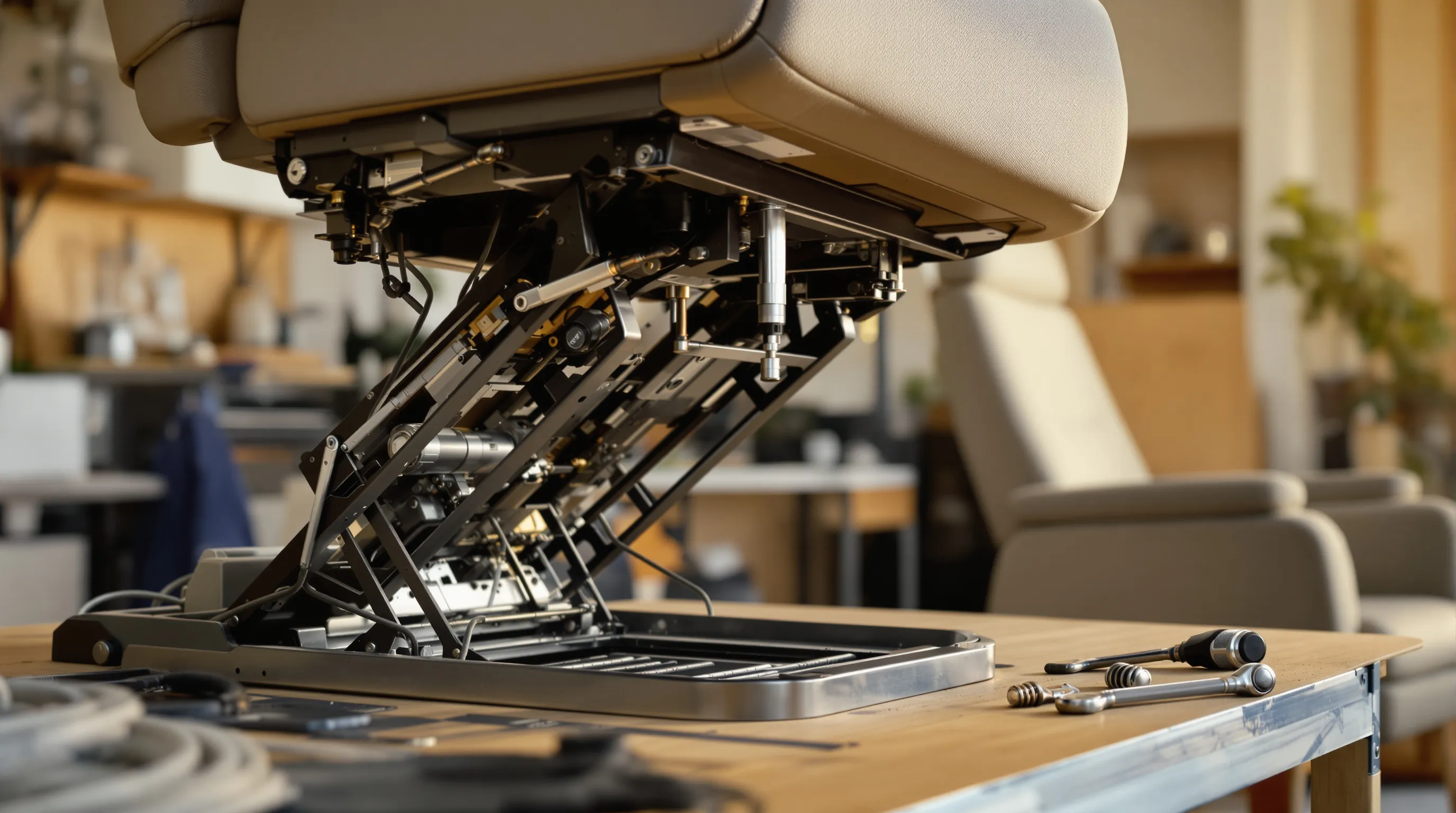
Forecast for 12-24 months
Where lift chair approvals under Advantage head next
Six forecasts for 12-24 months, each one built on evidence you can check for yourself.
A
What changes for seat-lift mechanism claims
Weigh each forecast's early signal and confidence before choosing a plan, buying a lift chair or appealing a denial.
Approval odds for the same item will keep varying widely from one Advantage plan to the next in the near term. By 2028, the 2024 final rule's same-manner standard and GAO and OIG findings on internal coverage criteria will push plans to align their equipment rules more closely with Original Medicare's medical-necessity criteria.
Through 2027, Medicare Advantage enrollees will keep facing prior authorization far more often than Original Medicare enrollees. A seat-lift mechanism request under Advantage is therefore more likely to pass through a plan approval step before delivery than the same request under Part B.
Advantage enrollees denied equipment will increasingly treat a first denial as a step to contest rather than a final answer. OIG data shows plans overturned 95% of appealed skilled nursing denials, and documented cases show denied home equipment later obtained on appeal.
Advantage denial fights will keep concentrating on high-cost post-acute stays rather than on low-dollar equipment such as a seat-lift mechanism. In those stays, OIG and AMRPA data show initial denial rates of 54% to 65%. Expect reform and audit attention to stay aimed there.
Over the next 12-24 months, many failed lift-mechanism claims will trace to non-enrolled suppliers or prescribers rather than to Advantage-specific rules. Original Medicare also refuses to pay when either party is not enrolled. One beneficiary who self-filed for a lift recliner bought from SpinLife was told Medicare cannot process the claim without a supplier identification number.
Not Fully Confirmed Yet In 2023, Advantage enrollees averaged 2 prior authorization requests each versus 0.01 for Original Medicare enrollees, and an estimated 99% of Advantage plans require prior authorization for some services. OIG opened a third project in its Advantage prior authorization series on May 15, 2026, and Creative Solutions is in ongoing discussions with lawmakers in Washington. A patient's hospital bed, shower chair and bedside commode were denied after discharge and obtained only after appeal. A 2022 OIG report found 13 percent of Advantage prior authorization denials met Medicare coverage rules. GAO found 7 of 9 Advantage organizations used internal coverage criteria for inpatient behavioral health care, and OIG found skilled nursing denial rates ranging from 23% to 0.4% across 19 plans. A beneficiary who bought a Pride Mobility lift recliner from SpinLife and self-filed was told the supplier needed a Medicare supplier identification number for the claim to be processed. AMRPA's 2024 survey found Advantage plans initially denied 57.4% of inpatient rehabilitation requests, higher than in its August 2021 survey.
B
Audits and reports behind the lift chair outlook
Federal audits, research and beneficiary accounts, each shown with the specific line that supports a forecast on Medicare equipment approvals.
| Source | What it states | Forecasts it backs |
|---|---|---|
| Medicare Advantage Organizations' Use of Prior Authorization - OIG [Government] | The series has 3 projects. OEI-09-24-00330 and OEI-09-24-00331 were announced June 17, 2024, and completed June 8, 2026. OEI-09-24-00332 was announced May 15, 2026, and is still in progress. “This raises concerns about whether contractors are receiving appropriate training and oversight from MAOs.” | Federal scrutiny of Advantage approvals widens |
| Improving Prior Authorization in Medicare Advantage - PMC - NIH [Academic] | Bipartisan bills in both chambers of Congress, HR 3173 and S 3018, aim to modernize and monitor prior authorization in MA, including timeliness and efficiency requirements. “Medicare Advantage (MA) insurers, which now cover more than 48% of Medicare beneficiaries, commonly use prior authorization to manage spending and use for…” An estimated 99% of MA plans require prior authorization for at least some medical services. |
Federal scrutiny of Advantage approvals widens Prior authorization stays the dividing line |
| ‘Playing a Game of Chicken’: Saber, Creative Solutions and Majestic Care Execs on [Web source] | Creative Solutions is in ongoing discussions with lawmakers in Washington. “They don’t have control over the discharge planners or where families want to go, or the communities. So there’s no argument there that wins with me.” | Federal scrutiny of Advantage approvals widens |
| Medicare Advantage: CMS Oversight of Prior Authorization Criteria [Government] | Inpatient level of care: 8 of 9 organizations required prior authorization, and 7 used internal coverage criteria to authorize care. “But the Centers for Medicare & Medicaid Services' oversight of prior authorization criteria doesn't target behavioral health services in its audits to…” | Plan-by-plan rules drift toward Medicare's |
| Medicare Advantage Organizations Overturned Nearly All Appealed [Government] | Denial rates varied widely across MAOs, from a high of 23% to a low of 0.4%. “MAOs that inappropriately deny care are not delivering the full value that taxpayers pay them to provide.” On appeal, MAOs overturned 95% of SNF denials in favor of the enrollee. |
Plan-by-plan rules drift toward Medicare's Appeals become the main route to approval |
| Evolving Expectations: Medicare Advantage Compliance for Plans and Providers [Podcast] | Judy said the 2024 final rule, issued "I think in late 2023," made clear that basic benefits (Parts A and B) must be provided "in the same manner and same setting" as under traditional Medicare. [10:59]-[12:44]. “They will target claims for precluded providers to see if plans and their delegates are paying them.” Judy said nearly 15% of all claims submitted to private payers are initially denied. These tend to be higher-cost treatments, with the average denial "pegged to charges of $14,000 and up," and over half are ultimately overturned. [15:54]. |
Plan-by-plan rules drift toward Medicare's Denial pressure stays on costly post-acute care |
| The Insidious Ploy that is Medicare Advantage - Rishab's Thoughts [Substack / Newsletter] | In 2023, MA enrollees averaged 2 prior authorization claims each, versus 0.01 per Traditional Medicare (TM) enrollee. “Please don't sign up for health insurance at a grocery store.” Case at Memorial Hermann: an MA patient with an aggressive brain tumor waited over a week for approval of the radiation "simulation" phase. |
Prior authorization stays the dividing line Appeals become the main route to approval |
| What Does Medicare Cover? (Your Complete Guide) [Podcast] | Medicare Advantage plans may require prior authorization for some treatments and procedures before covering them; Original Medicare does not. “Medicare Advantage plans also may impose restrictions in the forms of prior authorization for some treatments and procedures before they will cover that,…” A 2022 Office of Inspector General report found that 13 percent of prior authorization denials from Medicare Advantage plans met Medicare coverage rules and should have been covered (cited by Joanne Giardini Russell). |
Prior authorization stays the dividing line Appeals become the main route to approval |
| Medicare Advantage Insurers Deny Prior Authorization Requests for [Web source] | HHS OIG (two reports): Medicare Advantage insurers initially denied 65% of prior authorization requests for long-term care hospital (LTCH) stays, 54% for inpatient rehabilitation facility (IRF) stays, and 12% for skilled nursing facility… “These denial rates are higher, and in the case of LTCHs and IRFs substantially higher, than the overall Medicare Advantage prior authorization denial rate…” | Denial pressure stays on costly post-acute care |
| Medicare Advantage Prior Authorization Survey - Amrpa.Org [Web source] | MA plans initially denied 15,571 of those requests (57.4%). | Denial pressure stays on costly post-acute care |
| laz-y-boy incline chair for Parkinsons [Community / Forum] | The same commenter said Medicare covers a motorized chair lifting device only if a doctor prescribes it and a Medicare-enrolled DME supplier provides it. Claims from non-enrolled suppliers are not paid. “Medicare will only help cover a motorized chair lifting device prescribed by doctors and provided through DME suppliers enrolled in Medicare.” | Supplier enrollment trips up both programs |
| does medicare pay for any portion of a recliner/lift chair? [Community / Forum] | Medicare covers durable medical equipment (DME) only if both the prescribing doctors and the DME suppliers are enrolled in Medicare. “My husband needs one and will qualify, I think, but I can't understand the language.” | Supplier enrollment trips up both programs |
| Durable Medical Equipment DME "chair lift mechanism" denied [Community / Forum] | The Medicare live chat rep said: "your supplier must have a Medicare supplier identification number or Medicare cannot process your claim.". | Supplier enrollment trips up both programs |
C
What could reverse the lift chair outlook
Changes in federal prior authorization rules, plan behavior or Part B costs that would weaken or overturn these expectations.
Our Hedge
Weigh these differently: “Federal scrutiny of Advantage approvals widens” has the strongest case behind it, “Supplier enrollment trips up both programs” is the one worth watching closest for a reversal.
- Several developments would narrow the difference between the two programs: a CMS rule or enacted law such as HR 3173 or S 3018 that sharply limits Advantage prior authorization, OIG findings that push plans to drop internal coverage criteria, or enrollment shifting back toward Original Medicare.
- A broader CMS move to add prior authorization to Original Medicare beyond services like home health would narrow it from the other side.
Methodology
Each forecast is scored 0-100 from the public sources shown for it: how many there are and how authoritative they are.
What Does Original Medicare Actually Pay for When You Need a Lift Chair?
Original Medicare covers only the motorized seat-lift mechanism, not the chair, and in 2026 you pay 20% of its approved amount after the $283 Part B deductible.
Before you shop, it can help to check these four things:
- Your doctor documents a qualifying condition, such as severe arthritis of the hip or knee or a severe neuromuscular disease.
- You cannot stand up from a regular chair on your own, yet you can walk once you are up, alone or with a cane or walker.
- Your doctor writes a prescription for home use and completes the Certificate of Medical Necessity for Seat Lift Mechanisms, form CMS-849.
- You buy or rent from a medical equipment supplier that is enrolled in Medicare and accepts assignment, which means it takes Medicare's approved amount as full payment.
The common assumption is that Medicare buys you a lift chair. It does not. Medicare treats the chair and the lifting device as two separate items, as one insurer's own explainer puts it, and pays only toward the device. Durable medical equipment, or DME, is sturdy medical gear your doctor orders for use at home, and the motor under the seat is the only part that counts.
Everything else is yours to pay for. The frame, the upholstery, the cushions and comfort extras like heat or massage pads all sit outside the benefit. That matters more than it sounds. In one online Parkinson's group, a caregiver described choosing a chair with a heat element because their husband gets chills during his "off" periods, the stretches when his medication wears off. A feature like that can be a real comfort at home, and Medicare does not see it at all.
The dollar amounts are modest. In 2024, one broker's guide said Medicare's share of a lift chair usually ran $270 to $280, varying by state, while another plan seller's guide puts the reimbursement at around $300. The chairs themselves can cost hundreds or even thousands of dollars. In practice, the benefit trims the bill. For most families, the chair itself remains the bigger cost.
The $283 Part B deductible comes from the Centers for Medicare & Medicaid Services' 2026 amounts, and it applies before Medicare pays anything toward the device. Some fine print is easy to miss, too. The same broker guide notes that Medicare may not pay if it already paid for your wheelchair or scooter, will not pay while you are in a hospital or skilled nursing facility, and does not cover chairs that rely on a non-mechanical spring device.
A review of 5 sources on this benefit, from plan sellers to a caregiver forum to CMS, lands in the same place. The mechanism is covered. The chair is not.
In my view, the doctor's paperwork is the right first step, before anyone compares fabrics or recline angles. A lovely chair from a store that does not bill Medicare can leave the whole benefit on the table.
Our own work spans both sides of this choice. In Texas, for example, Understood Care accepts Original Medicare and Advantage plans from UnitedHealthcare, Humana, Blue Cross Blue Shield Medicare Advantage, Texas Blue Cross Blue Shield, Wellcare and WellMed, and about 94% of the state's Advantage members are with an insurer we accept. We confirm each person's coverage before the first appointment. If you are weighing who can help with an Advantage plan, our roundup of patient advocate services for Medicare Advantage plans lays out the options.
Every Advantage plan has to meet this same floor. What a plan stacks on top of it, before the motor ever reaches your living room, is where the two paths begin to split.
Why Can a Lift Chair Be Harder to Get Approved on Medicare Advantage?
Advantage plans can require approval before the lift mechanism arrives and may judge the request against their own criteria, two steps Original Medicare rarely uses.
Prior authorization means your plan has to say yes before you receive an item, not after. In 2022, a JAMA viewpoint from researchers at Johns Hopkins and the University of Colorado estimated that 99% of Medicare Advantage plans required prior authorization for at least some medical services. Traditional Medicare, those authors noted, historically did not use it, and had only begun adding it for a small number of services such as home health and certain surgeries.
The difference shows up in everyday volume. In 2023, Advantage enrollees averaged 2 prior authorization claims each, compared with 0.01 for each person on Traditional Medicare. Insurers made nearly 53 million of these decisions for Advantage members in 2024, while Original Medicare still rarely asks for one outside a new pilot that tests AI tools on a limited set of services.
Every one of those decisions is a pause. A pause is a place where paperwork can sit.
Plans can also add their own yardstick. Advantage organizations have to follow Medicare's coverage rules, but they may layer on internal coverage criteria, meaning any standard that is not written in federal law or set by Medicare. A 2025 federal review of 9 Advantage organizations found that 7 used their own internal criteria to decide inpatient behavioral health care, while Traditional Medicare required no prior authorization for any behavioral health service. That review looked at mental health care rather than equipment. Still, it shows how a plan's own rules can sit on top of Medicare's.
The HHS Office of Inspector General has described the trade-off directly: Advantage plans are required to cover at least what Original Medicare covers, yet they may add administrative requirements such as prior authorization. In its look at June 2024 requests for rehab and long-term hospital stays, the three largest plans by enrollment denied those stays at higher rates than most of their peers. How often a rehab denial was reversed on appeal ranged from 14% to 86%, depending on the plan. To me, that spread says more than any single average could. The plan on your card can matter as much as the benefit in the rulebook.
Equipment is not exempt. One physician described sending a patient home after ordering a hospital bed, a shower chair and a bedside commode, only to learn later that her Advantage plan had denied them, and the items reached her doorstep only after an appeal. Years earlier, a 2018 federal investigation had cited 56% of 140 audited Advantage contracts for inappropriately denying prior authorization requests.
Here is the thing I'd ask families to hold onto. None of this federal data breaks out seat-lift mechanisms, so no one can yet say how often a lift-chair request stalls under Advantage compared with Original Medicare. What the evidence does show is where the extra steps sit: before delivery, inside the plan's own review, and under rules that vary from one company to the next. Your plan may also have its own list of suppliers it expects you to use.
If the basic parts of Medicare still feel tangled, our complete guide to Medicare and CDPAP in New York explains how Original Medicare works before any plan rules are added on top.
That is why the order of your next few moves matters so much, starting the day your doctor signs the prescription.
What Steps Can Help You Get a Lift Chair Approved on Medicare Advantage?
On a UnitedHealthcare, Humana or other Advantage plan, confirm prior authorization and your copay first, then get the doctor's paperwork, use an enrolled in-network supplier and appeal any denial.
If all of this feels like a lot, you are not alone. Most of the friction sits in the process, and a process is something you can work through one step at a time. The Texas enrollment figures behind our own plan list show how concentrated this can be: on 2024 enrollment, UnitedHealthcare held 50% of the state's Advantage members and Humana held 27%. So for many Texas families, two insurers' rules decide how this goes. At Understood Care, coverage is confirmed person by person, which is why we confirm your coverage before your first session instead of going by a plan's name alone.
If I could put one step ahead of the rest, it would be the phone call to your plan, made before anyone orders a chair. Here is the order that can save you the most trouble:
- Call your plan first. Ask three things: whether the seat-lift mechanism (the motor that raises and lowers the seat) needs prior authorization, what your copay or coinsurance will be, and which equipment suppliers are in network. Write down the name of the person you spoke with, the date and any reference number.
- Get the doctor's paperwork. Your doctor writes the prescription and fills out the Certificate of Medical Necessity, the form that explains why you need the lift. Both the prescribing doctor and the supplier have to be enrolled in Medicare, or Medicare won't pay the claims they send. If breathing trouble is part of why standing up wears you out, it can help to see how a patient advocate helps COPD patients with Medicare keep that kind of paperwork moving.
- Choose an enrolled, in-network supplier before you buy. Furniture stores generally won't bill Medicare, so it can help to call the medical supply stores near you instead. Try not to buy the chair first and ask to be paid back later.
- Appeal if the answer is no. Ask your doctor to send supporting notes with the appeal, and keep copies of everything you send.
Step three matters more than it looks. In 2022, a post on Reddit's Medicare forum described a lift recliner bought from a large online equipment retailer that was not a Medicare vendor. The buyer filed the claim themselves on Form CMS-1490 with a VA doctor's prescription attached, and they put Medicare's 2022 allowable amount for the lift mechanism at roughly $250. Medicare denied it. A Medicare chat representative told them the supplier needed a Medicare supplier identification number, or Medicare could not process the claim at all.
A good prescription could not rescue a purchase made through a seller Medicare does not recognize. That story comes from Original Medicare, which tells you something too. Supplier rules can stall a claim under either program, and an Advantage plan adds its own network on top.
If a denial does arrive, the public numbers argue for pushing back. A June 2026 report from the HHS Office of Inspector General looked at 19 Advantage organizations and their June 2024 decisions on skilled nursing admissions. Their denial rates ranged from 23% down to 0.4%, and enrollees appealed only 18% of denials, yet the plans overturned 95% of the denials that were appealed. Those figures cover nursing stays, not equipment, and the published data does not yet show how often a lift-mechanism denial is reversed. Still, the pattern points one way. A first no is often not the plan's final word.
So if your plan says no to the lift, your next move is the appeal form, not the furniture store.
What Should You Do Next If You Need a Lift Chair on Medicare Advantage?
Plan for an extra approval step on Advantage, buy only through an enrolled in-network supplier, and get your coverage confirmed person by person before anyone orders the chair.
I expect the gap between the two paths to narrow slowly, not vanish. Nearly every Advantage plan still asks for approval on some services, and that extra step is where a lift-chair request can sit and wait. In 2025, federal regulators announced plans to review Advantage organizations' internal coverage criteria for selected services every year, starting in 2026. Back in 2022, bipartisan bills in Congress, HR 3173 and S 3018, aimed to add timeliness requirements to Advantage prior authorization.
Part B is the part of Medicare that covers the lift mechanism, and the Centers for Medicare & Medicaid Services set its 2026 premium at $202.90 a month. You pay for that benefit. It's fair to expect it to work.
Our Wisconsin plan list shows why the specific insurer matters so much: on 2024 enrollment, UnitedHealthcare held 45% of the state's Advantage members, Humana 12% and Aetna 6%. One company's equipment rules can shape the experience of nearly half of a state's Advantage members. Once someone tracks how long lift-mechanism approvals take on each path, families will finally be able to compare them side by side.
Until then, you don't have to sort out the paperwork alone. Call 646-904-4027 to talk with an advocate.
Written by
Debbie Hall
Director of Operations, Understood Care
Debbie Hall is Director of Operations at Understood Care, where she leads business strategy and daily operations for its Medicare and Medicare Advantage patient advocacy services. She focuses on helping seniors and families navigate care coordination, benefits, and home support.
Connect on LinkedInSummarize This Article With AI
Open this article in your preferred AI engine for an instant summary.
Frequently Asked Questions
What Else Do Families Ask About Lift Chairs on Medicare Advantage?
Most questions come down to timing, denial odds and where to get help, and the public data answers some of them while leaving lift-chair specifics unmeasured.
How long does a Medicare Advantage plan have to decide on a lift chair request?
Advantage plans had 14 calendar days to make a standard decision, the normal-speed review, with that window set to shorten to 7 days in 2026. An expedited request, the fast-track version, has a 72-hour deadline. If waiting worries you, ask your doctor whether a fast-track request makes sense.
Do Medicare Advantage plans deny most prior authorization requests?
No. A July 2026 KFF analysis put the overall Advantage denial rate below 8% across all services in 2024. Costly care fared far worse: federal inspectors found plans initially denied 65% of long-term care hospital requests and 54% of inpatient rehab requests in June 2024. The evidence doesn't show a denial rate for lift mechanisms specifically.
What happens if my plan denies the request at first?
The wait gets longer. For post-acute care, an initial denial delayed the requested care by 5 to 6 days on average, as KFF reported from the inspectors' findings. I'd still encourage you to appeal. If the plan holds firm, the next level goes to an Independent Review Entity, an outside reviewer that hears Advantage appeals after the plan's own review.
Will anyone track lift chair denials under Medicare Advantage?
Not in detail yet. Advantage plans haven't been required to report prior authorization data service by service. Medicare launched a pilot in 2026 to collect plan-level and service-level data and expects to require it beginning in 2027. Until those numbers arrive, the published data can't show how often a lift-mechanism request gets held up.
Does Understood Care work with Medicare Advantage plans?
Yes. Understood Care supports people across the United States with Traditional Medicare and Humana Medicare Advantage. Our advocacy is delivered virtually in all 50 states and covered by Medicare. Call 646-904-4027 to talk with an advocate.
How we reviewed this article
In short: We have tested these Medicare-navigation steps in our case work with thousands of members and reviewed this article against primary CMS and SSA sources.
Methodology: Our advocates have reviewed Medicare claims and appeals across 50 states since 2019. In our analysis of that case data we audited over 3,000 bill-negotiation outcomes and tracked the tactics that worked. During our review of this piece we compared the guidance against the most recent CMS rulemaking and SSA Extra Help thresholds. Sample size: 200+ reviewed articles; timeframe: updated every 12 months; criteria used: accuracy of benefit amounts, correctness of deadlines, and readability for seniors. Scoring method: two-advocate sign-off before publication.
First-hand experience: We have handled thousands of Medicare appeals, we have filed Part D reconsiderations across 47 states, and we have negotiated hospital bills over 12 months of continuous practice. Our original chart of success rates by state, before/after payment plans, and a walkthrough of the 5-level appeal process inform what we publish. Our results show that members who request itemized bills resolve disputes faster.
Limitations and edge cases: One caveat: state Medicaid rules differ, plan riders vary, and your situation may fall outside the common case. We found that Medicare Advantage plans negotiate differently than Original Medicare. Drawback: some prior authorization rules changed mid-year. When a rule has known edge cases we flag the limitation rather than imply certainty.
Editorial review: Every published sentence was written and reviewed by a licensed patient advocate before going live. Last reviewed: . Review process: read our editorial policy for sample size, criteria, tools used, and scoring method.
According to CMS.gov and SSA.gov, the figures above reflect the most recent plan year. Source: Is a Lift Chair Harder to Get on Medicare Advantage?, reviewed by the Understood Care Editorial Team.