


Understood Care
Patient Advocacy Without the Call Center
One dedicated advocate for the bills, appeals, appointments, and paperwork. Fully virtual, serving all 100 North Carolina counties, covered by Medicare.
Or call (646) 904-4027. We confirm your coverage before your first session.
Coverage data 2024. Plan networks change - we confirm exactly what your plan covers before any work begins.
Real patients and caregivers, nationwide and in North Carolina: one dedicated advocate, reachable by phone and text. Read patient reviews
Patient advocate services
Understood Care's patient advocate services in North Carolina are delivered by one dedicated healthcare advocate who does the work with you: makes the calls, files the paperwork, and stays on the case until it is resolved. Some families call this role a care navigator, a Medicare coordinator, or a caseworker; Medicare's own name for the covered benefit is Principal Illness Navigation. Whatever you call it, it is fully virtual and covered by Medicare for most members.
Line-by-line review of hospital and doctor bills, duplicate charges, balance-billing questions, and payment-plan negotiation.
Bill assistanceWhen Medicare or your plan says no: the appeal letter, the deadlines, the medical-necessity evidence, and the follow-up calls.
How appeals workGetting seen sooner, keeping specialists and primary care on the same page, and lining up a second opinion when it matters.
Appointment helpFormulary exceptions, Extra Help screening, manufacturer programs, and pharmacy switches that lower what you pay at the counter.
Lower medication costsMedicare Savings Programs, Extra Help, SNAP, utility and rent assistance: finding what you qualify for in North Carolina and filing the paperwork.
Application helpDischarge planning, home health and equipment orders, caregiver support, and one person who keeps every provider informed.
Care coordinationReal outcomes for real North Carolina patients - covered by Medicare. Patient details changed for privacy.
See all Understood Care success stories Kimberly Smith Care Advocate
 From the first call, Kimberly is the same person every time: no call center, no starting over, and no surprise bills.
 T'Keyah Ingram Care Advocate
 T'Keyah works one-to-one with Medicare members on bills, denials, appointments, and benefits, and stays on the case until it is resolved.
 Kristina Mabry Care Advocate
 One dedicated advocate with a direct phone and text line: Kristina makes the calls and handles the paperwork so you do not have to.
Free SHIIP Medicare counseling in all 100 NC counties, CAP/DA paid family caregiving, and PACE all-inclusive care - your complete 2026 guide to Medicare help in North Carolina.
Read the guideCAP/DA lets NC Medicaid recipients hire a trusted family member as a paid personal assistant. Learn eligibility rules, income limits, PPL payroll, and how to apply in 2026.
Read the guideThe state's major metros and regional hubs, 54 cities across every corner of North Carolina, served virtually by the same advocates. Prefer the raw data? See North Carolina Medicare by the numbers.
Charlotte · Concord · Gastonia · Huntersville · Kannapolis · Indian Trail · Monroe · Matthews · Cornelius · Mint Hill · Mooresville · Statesville · Salisbury · Waxhaw
Raleigh · Durham · Cary · Chapel Hill · Apex · Wake Forest · Holly Springs · Garner · Morrisville · Fuquay-Varina · Sanford
Greensboro · Winston-Salem · High Point · Burlington · Kernersville · Thomasville · Asheboro · Lexington · Clemmons · Mebane
Greenville · Rocky Mount · Wilson · Goldsboro · Kinston · Lumberton
Wilmington · Jacksonville · New Bern · Havelock · Elizabeth City
Asheville · Hickory · Hendersonville · Boone · Shelby
Since January 2024, Medicare covers professional healthcare navigation (Principal Illness Navigation and Community Health Integration). Part B pays about 80%; a Medigap plan typically covers the rest, so most members pay $0.
A majority of North Carolina's Medicare beneficiaries, 56.9% in 2025, are enrolled in a Medicare Advantage plan rather than Original Medicare. Acceptance varies plan by plan. Tell us which plan you have and we confirm what it covers before any work begins. No surprise bills, ever.
That is a normal place to start. Read your red-white-and-blue card to us over the phone and we will explain your coverage in plain English, whether or not you sign up.
Medicare is federal, but the rules and assistance programs around it change at the state line. These four are specific to North Carolina, and your advocate works with them every week.
Your six-month Medigap Open Enrollment Period begins the first month you are both 65 or older and enrolled in Part B, and it does not repeat. North Carolina has no birthday rule and no year-round switching, so miss that window and insurers can medically underwrite you. But North Carolina does something many states do not: state law (G.S. 58-54-45) requires insurers to offer Medigap Plans A, D, and G to beneficiaries under 65 who qualify through disability, a right that took effect January 1, 2020. Premiums for under-65 buyers can run higher, and a pre-existing-condition wait of up to six months may apply. Timing and plan choice are the whole game, which is exactly where an advocate earns their keep.
North Carolina's State Health Insurance Assistance Program is the Seniors' Health Insurance Information Program (SHIIP), run by the NC Department of Insurance with trained, commission-free volunteers in all 100 counties. Statewide line: 1-855-408-1212. In 2024 SHIIP counseled more than 69,000 beneficiaries and saved them a combined $53 million. Great for one-off enrollment questions; we point our own members there during Open Enrollment.
Many North Carolinians qualify for federal Extra Help (the Part D Low-Income Subsidy) and for the Medicare Savings Programs, which NC Medicaid runs as QMB, SLMB, and QI to help cover Part B premiums and cost-sharing. Apply through your county Department of Social Services (DSS) or online at ePASS (epass.nc.gov). North Carolina expanded Medicaid in December 2023, which widened the door for many low-income seniors. Checking every one of these is standard advocate work, and most eligible seniors never claim them.
North Carolina's Medicaid alternatives to a nursing facility are CAP/DA (the Community Alternatives Program for Disabled Adults), a consumer-directed waiver that can pay a family member you choose, though typically not a spouse, to care for you at home, and PACE (Programs of All-Inclusive Care for the Elderly), which bundles Medicare and Medicaid for dual-eligible adults 55 and older near a provider site such as Wilmington or Asheville. Apply for CAP/DA through your county's CAP/DA case management entity (often the county DSS), and apply early: waitlists can run months to more than a year. These are Medicaid programs; for dual-eligible families we handle the Medicare side while you run the caregiving.
Go deeper
Medicare Help in North Carolina: SHIIP, CAP/DA, and PACEThe full, sourced guide to the North Carolina rules and programs your advocate works with.
You are matched with one dedicated advocate and get their direct phone, email, and text. No call queue, no starting over. Even months after your case wraps up, the same person picks up.
Behind your advocate, AI tools surface the North Carolina programs and benefits you actually qualify for, from the Medicare Savings Programs to county services, so answers come faster. A human stays in the loop on every case.
While your case is active you hear from your advocate every 7 days. After it is resolved, they still check in every month. You are never left wondering what is happening.

Post-hospital meal benefits can cover home-delivered meals. Learn triggers, duration, and fast steps.
Read more
If your SNAP benefits are cut, denied, or your case was closed, learn how to read your notice, request a fair hearing to appeal, and reapply - plus the deadlines that protect your benefits.
Read more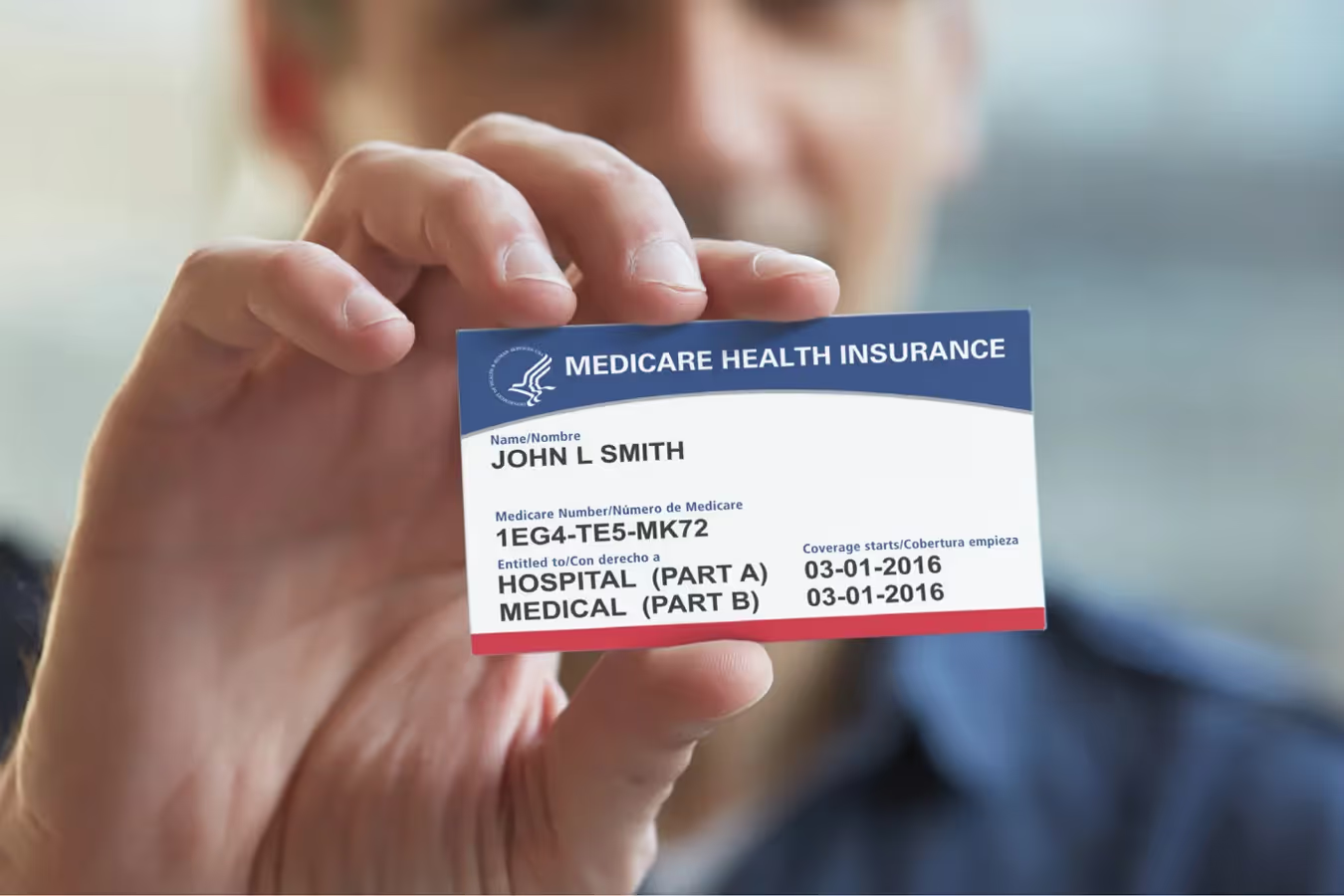
Confused by Medicare denials? Discover the Top 10 Reasons Medicare Denies Claims in 2026 and how to reduce delays, errors, and appeals.
Read moreThe same Medicare-covered service, with each state's own programs and rules explained.
About 2.3 million North Carolinians are on Medicare, and the system is not
getting simpler. Wherever you live in the state, your advocate is a phone
call away, and the first conversation costs nothing.


Yes. Since January 2024, Medicare pays for professional healthcare navigation through Principal Illness Navigation and Community Health Integration services. Medicare Part B covers about 80% of the cost, and a supplemental (Medigap) plan typically covers the rest, so most North Carolina members pay $0. We confirm exactly what your coverage looks like before your first session, and there are no surprise bills.
Yes, all 100 counties. The service is fully virtual, delivered by phone, video, and secure messaging, so it works the same in Charlotte, Raleigh, Greensboro, Durham, Winston-Salem, Fayetteville, Wilmington, Asheville, and every rural county in between. There is no office to travel to.
Advocates work virtually and are matched to you, not to a zip code. What matters is that your advocate is the same person every time (One Advocate, For Life), knows North Carolina's programs like SHIIP, the Medicare Savings Programs, and the CAP/DA waiver and PACE, and gives you their direct phone, email, and text, so you never start over with a stranger in a call queue.
Not on your own timeline. Your one guaranteed six-month Medigap Open Enrollment Period begins the first month you are both 65 or older and enrolled in Part B, and it does not repeat. North Carolina has no birthday rule and no year-round switching window, so after that window insurers can medically underwrite you. Where North Carolina goes beyond the federal floor is for people who came onto Medicare early: state law (G.S. 58-54-45) requires insurers to offer Medigap Plans A, D, and G to beneficiaries under 65 who qualify through disability, effective January 1, 2020. Because everything here turns on timing, this is exactly where an advocate helps.
Those are North Carolina Medicaid programs. CAP/DA (the Community Alternatives Program for Disabled Adults) is a consumer-directed waiver that can pay a family member you choose to care for you at home instead of a nursing facility, and PACE bundles Medicare and Medicaid care for dual-eligible adults 55 and older near a provider site. Our advocacy is billed through Medicare, so we focus on the Medicare side: bills, appeals, appointments, coverage questions. For dual-eligible families that split works well: you manage the waiver caregiving, and your parent's advocate handles the Medicare paperwork.
SHIIP, the Seniors' Health Insurance Information Program (1-855-408-1212), is North Carolina's free Medicare counseling service, run by the NC Department of Insurance with trained volunteers in all 100 counties, and it is excellent for one-off questions. Understood Care is different: a dedicated advocate who does the work itself, makes the calls, files the appeals, untangles the bills, and stays with you month after month, covered by Medicare. The two are complementary, and we often point our own members to SHIIP counselors for enrollment-season plan comparisons.
In North Carolina we are in-network for Original Medicare (traditional fee-for-service Medicare); UnitedHealthcare Medicare Advantage plans (~33% of North Carolina MA members); Aetna Medicare Advantage plans (~12% of North Carolina MA members). Together that covers roughly 67.7% of North Carolina's Medicare beneficiaries. Market-share data: 2024. Plan networks change, so we confirm exactly what your plan covers before any work begins - no surprise bills.
Program facts on this page were last verified on 2026-07-31 against: NC Department of Insurance (SHIIP), NC DOI (Medicare Supplement / Medigap rules and the under-65 right under G.S. 58-54-45), NC Medicaid (Medicare Savings Programs), NCDHHS (CAP/DA), NC Medicaid (PACE), and CMS (2024 Physician Fee Schedule: navigation services). Beneficiary counts come from the CMS Medicare Monthly Enrollment file (2025). Understood Care is an independent private advocacy service and is not affiliated with any government agency, the NC Department of Insurance, or SHIIP.