


Understood Care
Coverage data 2024-2025. Plan networks change - we confirm exactly what your plan covers before any work begins.
Real outcomes for real Ohio patients - covered by Medicare. Patient details changed for privacy.
See all Understood Care success stories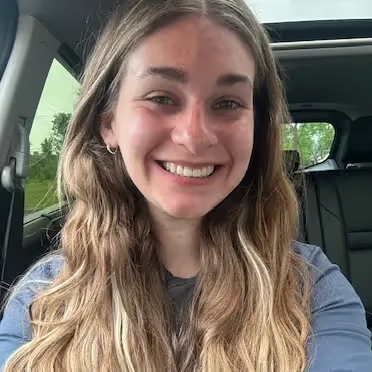 Makenna Cardona Care Advocate
 One dedicated advocate with a direct phone and text line: Makenna makes the calls and handles the paperwork so you do not have to.
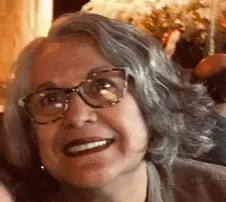 Daniele Marsh Care Advocate
 Daniele helps patients and caregivers untangle Medicare, from a denied claim to a benefit nobody mentioned, with a check-in every week while a case is open.
 Desi Palmer Care Advocate
 From the first call, Desi is the same person every time: no call center, no starting over, and no surprise bills.
Free Ohio Medicare help: OSHIIP counseling, PASSPORT waiver that pays family caregivers, and more. Get phone numbers and eligibility rules. Call today.
Across Southwest Ohio, care routes through large systems such as UC Health, TriHealth, and Mercy Health around Cincinnati and Premier Health and Kettering Health around Dayton, and coordinating handoffs between them is real work. Understood Care is a virtual service: phone, video, and secure messaging. For Dayton members that means no waiting room and no travel, whether the problem is a confusing hospital bill, a denied claim, a referral that went nowhere, or a parent in Montgomery County who needs someone watching their whole picture. Your advocate is the same person every time, follows up every 7 days while your case is active, and still checks in monthly after it is resolved. Many Southwest Ohio families also run Ohio Medicaid's PASSPORT waiver, MyCare Ohio, and PACE programs alongside Medicare; we handle the Medicare side.
Dayton is younger than the state average (13.7% are 65+, versus 17.9% statewide), which can make Medicare-savvy help harder to find locally. Of the 118,195 Medicare beneficiaries in Montgomery County, 61.3% were on Medicare Advantage plans in 2025, in line with Ohio's 56.7%. About 20,381 neighbors are dual-eligible for Medicare and Medicaid, the group Ohio's PASSPORT, MyCare Ohio, and PACE families know well.
Of 40 Medicare-certified homes, 14 rate 4+ CMS stars and 5 rate just 1 star, a spread an advocate helps families navigate. Highest-rated nearby:
About 8,329 Dayton households are a person 65+ living alone, and that is exactly who a dedicated advocate keeps from falling through the cracks. 17.3% of senior households here have no vehicle (about 2,446 households), which is why a fully virtual advocate, plus Medicare-covered ride benefits where plans include them, matters. 20 Medicare-certified home health agencies are based in Dayton (avg patient-care quality 3.8/5); we help compare them and get orders in place. Setting up home care, meal delivery, and transportation is core advocate work, covered by Medicare.
About 18% of Dayton seniors live below the poverty line (Ohio: 9.5%), and many more qualify for help they never claim: Extra Help with Part D costs and the Medicare Savings Programs. Checking every one of those is standard advocate work. 38.8% of seniors here live with a disability, where equipment orders and prior authorizations pile up fastest. The federal government lists 4 primary-care shortage designations in Montgomery County, so appointment hunting is a real problem an advocate takes over. Specialized care nearby: 17 Medicare-certified dialysis facilities (avg 2.8/5 CMS stars) and 8 hospice providers.
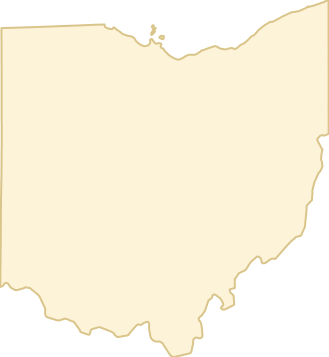
Dayton, Ohio · Montgomery County · served virtually statewide
From CMS Care Compare (9 Medicare-certified hospitals in the area; a sample below). ER medians below are CMS-reported; Ohio's statewide median is 153 minutes. Billing disputes, discharge planning, and referral follow-ups with these systems are everyday advocate work:
Medigap in Ohio gives you one guaranteed six-month Open Enrollment window that opens when you are both 65 and on Part B, with no birthday rule and no year-round switching, so timing matters for Dayton members. Ohio is also stricter than many states on the front end: it is one of only a few that does not require insurers to sell Medigap to beneficiaries under 65, so under-65 enrollees generally wait until they turn 65. OSHIIP, Ohio's Medicare counseling service run by the Ohio Department of Insurance and reachable at 1-800-686-1578, gives free, commission-free help to Dayton residents. Many Dayton seniors also qualify for Extra Help and the Medicare Savings Programs but never claim them. The full, sourced rundown is on our Ohio patient advocacy hub.
Ohio's PASSPORT waiver lets Medicaid families age 60 and older stay home instead of a nursing facility, and its consumer-directed options let you choose and hire your own caregiver, including a qualified family member, while their parent's Medicare paperwork piles up. MyCare Ohio and PACE do the same for dual-eligible adults. That split is exactly where an advocate fits: you handle the caregiving, we handle the Medicare side. See how PASSPORT, MyCare Ohio, PACE, and Medicare fit together on our Ohio hub.

Connect with a HIPAA-compliant advocate by phone or video. We join your appointments, coordinate care, and make sure your questions are heard anywhere in the U.S.
Read more
Need tele-health? Learn Lifeline, low-cost plans, and backup visit options to afford internet.
Read more
Learn how to read your Annual Notice of Change for SNAP and housing benefits fast, which pages to check first, and what to do next.
Read more
Three doors, all worth knowing. For free, unbiased counseling on plans and enrollment, Ohio's State Health Insurance Assistance Program (reach it through the national SHIP line at 1-877-839-2675 or shiphelp.org). For local services such as meals, rides, and in-home help, the Eldercare Locator (1-800-677-1116) connects you to the Area Agency on Aging serving Dayton. And for one dedicated advocate who does the ongoing work with you, bills, denials, appointments, and benefits, Understood Care, covered by Medicare for most members and usually $0: call (646) 904-4027 or get started online.
Yes. Medicare has paid for professional healthcare navigation (Principal Illness Navigation and Community Health Integration services) since January 2024. Part B covers about 80% and a Medigap plan typically covers the rest, so most members in Montgomery County pay $0. We confirm your exact coverage before your first session, and there are no surprise bills.
Per CMS enrollment data for 2025, Montgomery County had 118,195 Medicare beneficiaries: 72,447 on Medicare Advantage plans (61.3%) and 45,749 on Original Medicare, with about 20,381 dual-eligible for both Medicare and Medicaid. Understood Care advocates work with both: Original Medicare members usually pay $0 through Part B plus a supplement, and we confirm Medicare Advantage coverage plan by plan before any work begins.
Per the US Census Bureau's American Community Survey, about 18,771 of Dayton's 136,741 residents are 65 or older (13.7%), within a county of roughly 98,025 seniors (Montgomery County). Most become Medicare-eligible at 65, and every one of them has the same federal benefits an advocate helps put to work.
Per CMS Timely & Effective Care data (period ending 06/30/2025), the median ER visit at Miami Valley Hospital runs about 161 minutes, and local hospitals range 135 to 161 minutes; Ohio's statewide median is 153 minutes. An advocate cannot shorten an ER line, but avoiding the ER for non-emergencies is advocate work: same-week appointments, urgent-care routing, and follow-up coordination.
No. Understood Care is fully virtual, delivered by phone, video, and secure messaging, so it works the same in Dayton as anywhere else in Ohio's 88 counties. If leaving home is hard, that is exactly the situation the service is built for.
Advocates work virtually and are matched to you, not to a zip code. You get one dedicated advocate with their direct phone, email, and text (One Advocate, For Life), and they work with Ohio's programs, OSHIIP counseling, the Medicare Savings Programs, the PASSPORT waiver, MyCare Ohio, and PACE, and the county services that apply in Montgomery County.
Those are Ohio Medicaid programs. PASSPORT, the state's largest home and community-based waiver for adults 60 and older who need a nursing-facility level of care, has consumer-directed options that let you choose and hire your own caregiver, including a qualified family member. MyCare Ohio combines Medicare and Medicaid for dual-eligible adults, and PACE (Program of All-Inclusive Care for the Elderly) bundles all care for dual-eligible adults 55 and older who need that level of care. Families we serve in Southwest Ohio use them. Our advocacy is billed through Medicare, so for dual-eligible families the split works well: you run the caregiving, and your parent's advocate handles the Medicare side.
In Ohio we are in-network for Original Medicare (traditional fee-for-service Medicare); Anthem Blue Cross and Blue Shield (Elevance) Medicare Advantage plans (~23% of Ohio MA members); UnitedHealthcare Medicare Advantage plans (~23% of Ohio MA members); Aetna Medicare Advantage plans (~19% of Ohio MA members); Humana Medicare Advantage plans (~14% of Ohio MA members). Together that covers roughly 88.4% of Ohio's Medicare beneficiaries. Market-share data: 2024-2025. Plan networks change, so we confirm exactly what your plan covers before any work begins - no surprise bills.
Southwest Ohio
Cincinnati · Hamilton · Springfield · Kettering · Middletown · Beavercreek · Fairfield · Huber Heights · All of Ohio
Local figures: US Census Bureau American Community Survey (2023, 5-year), CMS Medicare Monthly Enrollment (2025), and CMS Care Compare, retrieved 2026-08-07. Statewide program facts were last verified on 2026-08-07; sources are listed on the Ohio hub, and the full county tables are on Ohio Medicare by the numbers. Understood Care is an independent private advocacy service and is not affiliated with any government agency or any hospital named above.