


Vermont will keep consolidating and loosening its Medicare Savings Program rules through 2027, building on the move that folded SLMB into QMB and raised income ceilings in 2026, plus the April 1, 2026 rule letting dependent relatives count toward income eligibility.
Key Points
- Vermont SHIP provides free, unbiased Medicare counseling in all 14 counties via DAIL and five Area Agencies on Aging at 1-800-642-5119.
- Vermont's QMB program can eliminate the $185/month Part B premium for beneficiaries with income up to approximately $1,304 per month.
- Choices for Care, Vermont's Medicaid LTSS waiver, lets you hire your own caregiver, including a family member in many cases.
Common Myths About Medicare Help in Vermont
Call each one, then see how other readers called it.
1
SHIP counselors are salespeople who will push you toward a specific plan. Vermont SHIP counselors receive no commissions and sell nothing. Their only job is to help you understand your Medicare options with no financial interest in the outcome.
2
You need to be in poverty to qualify for Vermont Medicare Savings Programs . The QI tier covers income up to approximately $1,761/month for an individual in 2026. Many Vermont seniors on Social Security fall within this range and do not know it.
3
Choices for Care only works with agency-hired caregivers. Choices for Care includes a consumer-directed option that lets you hire and manage your own personal care attendant, including a family member in many cases.

Short answer: Medicare Help in Vermont: Programs That Pay for Care (2026) is a Medicare care-navigation topic and refers to the practical steps explained in this guide. Key Points Vermont SHIP provides free, unbiased Medicare counseling in all 14 counties via DAIL and five Area Agencies on Aging at 1-800-642-5119. Understood Care advocates have helped thousands of members with medicare help in vermont:. Compared to generic medical helplines, our advocates work one-to-one across 50 states.
Plans we accept in Vermont
covering ~63.5% of Vermont's Medicare beneficiaries
- Original Medicare
- UnitedHealthcare ~15% of MA members
- Humana <1% of MA members
Coverage data 2025. Plan networks change - we confirm exactly what your plan covers before any work begins.
Written by Debbie Hall - Director of Operations, Understood Care | Updated September 2026
Quick Answer
The Short Answer
Vermont Medicare beneficiaries have access to free SHIP counseling (call 1-800-642-5119), the Choices for Care Medicaid waiver for consumer-directed home care, three tiers of Medicare Savings Programs that can eliminate your Part B premium, and the SASH care coordination program in many senior housing communities. Most of these programs are accessed through DAIL or your regional Area Agency on Aging at no cost.
Did this answer your question?
Key Takeaways
- Free counseling is available statewide. Vermont SHIP serves all 14 counties through DAIL and five Area Agencies on Aging. Call 1-800-642-5119 at no cost.
- Choices for Care lets you hire your own caregiver. Vermont's Medicaid LTSS waiver includes a consumer-directed option where you control who provides your care, including a family member in many cases.
- The Part B premium can be eliminated. Vermont's QMB program pays the $185/month Part B premium plus deductibles and coinsurance for people who qualify at approximately $1,304/month income or below.
- Vermont has no birthday rule for Medigap. Your main no-underwriting window is the 6-month open enrollment period at age 65 when you enroll in Part B. Missing it has real consequences.
- SASH coordinates care in Vermont senior housing. The Support and Services at Home program helps residents of participating communities stay home longer and avoid unnecessary hospitalizations.
Vermont has six distinct Medicare help programs that most beneficiaries never use, including a free counseling service available in all 14 counties, a consumer-directed home care waiver called Choices for Care, and Medicare Savings Programs that eliminate the $185/month Part B premium entirely for people who qualify. The state's five Area Agencies on Aging serve Vermont's entire geographic footprint from Burlington to the Northeast Kingdom, and a care coordination program called SASH (Support and Services at Home) operates in affordable senior housing communities statewide. Most of the Vermont families I work with discover these programs only after years of paying out of pocket for costs they did not need to bear.
Questions This Article Answers
- How do I get free Medicare counseling in Vermont?
- What is Choices for Care and do I qualify for consumer-directed home care?
- What programs can help me pay my Medicare premiums and drug costs in Vermont?
What Is Vermont SHIP and How Do You Get Free Medicare Counseling?
In short: Vermont's State Health Insurance Assistance Program, known as SHIP, provides free and unbiased Medicare counseling to any Vermont beneficiary or family member who needs help.
Vermont's State Health Insurance Assistance Program, known as SHIP, provides free and unbiased Medicare counseling to any Vermont beneficiary or family member who needs help. SHIP counselors do not sell insurance products, they do not receive commissions, and they have no financial stake in which plan you choose. That independence is what makes the program genuinely valuable.
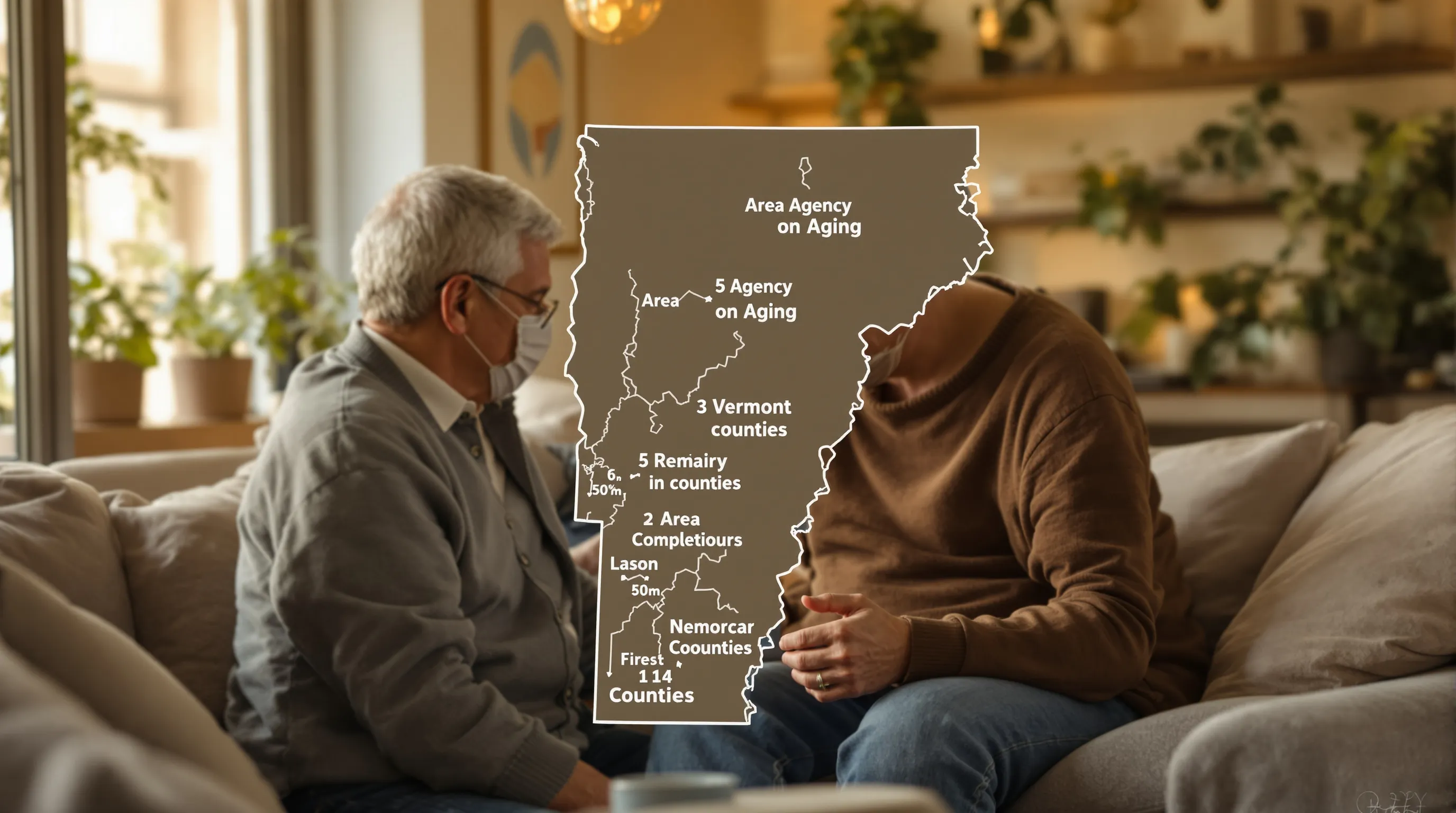
In Vermont, SHIP is coordinated by the Department of Disabilities, Aging and Independent Living (DAIL) and delivered locally through Vermont's five Area Agencies on Aging. This means you can work with a counselor who understands Vermont-specific programs, not just the federal Medicare rules that apply in every state.
What Vermont SHIP counselors help with:
- Medicare plan comparisons: A counselor can compare costs and coverage of Original Medicare, Medicare Advantage plans available in your county, and standalone Part D drug plans. This is especially useful in Vermont, where MA plan options are more limited than in larger states.
- Enrollment assistance: Whether you are turning 65, newly eligible due to disability, or changing plans during Annual Enrollment (October 15 to December 7), a SHIP counselor can walk through each step with you.
- Billing and claims review: If you receive an Explanation of Benefits that does not make sense, or if Medicare denied a service you expected to be covered, a SHIP counselor can help you understand what happened and what to do next.
- Appeals preparation: SHIP counselors can explain the five levels of Medicare appeal and help you prepare a redetermination request for a denied claim.
- Benefits screening: A SHIP session is often the fastest way to find out whether you qualify for Vermont's Medicare Savings Programs or federal Extra Help for drug costs.
To reach Vermont SHIP, call DAIL at 1-800-642-5119. You can also contact your regional Area Agency on Aging directly. Appointments are free, and most AAAs offer phone or video sessions for people in rural parts of Vermont.
What Is Choices for Care and How Does Consumer-Directed Home Care Work in Vermont?
In short: Choices for Care is Vermont's Medicaid-funded long-term care waiver program for adults who need nursing facility level care but want to remain at home or in their community.
Choices for Care is Vermont's Medicaid-funded long-term care waiver program for adults who need nursing facility level care but want to remain at home or in their community. The program is Vermont's structured alternative to nursing home placement for people who meet both clinical and financial eligibility requirements.
The name reflects the program's core idea. Rather than having the state assign an agency to provide your care, Choices for Care participants who select the consumer-directed option can hire and train their own personal care attendant, including a family member in many cases. You decide who comes into your home, when they come, and how care is delivered.
Who qualifies for Choices for Care in Vermont?
Eligibility requires meeting two separate standards:
- Clinical eligibility: Your care needs must meet Vermont's nursing facility level of care standard. A nurse from DAIL or an authorized assessment agency will conduct a home visit to evaluate your daily living needs, medical situation, and safety.
- Financial eligibility: You must qualify for Vermont Medicaid (Green Mountain Care). Vermont expanded Medicaid under the Affordable Care Act, so the income threshold here is higher than in non-expansion states. Specific income and asset limits apply and are reviewed annually.
What services can Choices for Care cover?
- Personal care assistance (bathing, dressing, grooming, toileting)
- Homemaking and meal preparation
- Adult day services
- Respite care for family caregivers
- Care coordination and case management
- Some assistive technology and home modification support
To apply, contact your regional Area Agency on Aging or DAIL directly at 1-800-642-5119. An assessor will visit your home at no cost to evaluate eligibility and explain the consumer-directed option. If you are already on Medicare and also qualify for Medicaid, Choices for Care works alongside your Medicare benefits: Medicare covers skilled nursing and therapy, while Choices for Care funds the ongoing personal care Medicare does not cover.
How Can Vermont Seniors Get Help Paying for Medicare Drug Costs?
In short: Prescription drug costs are one of the most common financial stresses I hear about from Vermont Medicare patients.
Prescription drug costs are one of the most common financial stresses I hear about from Vermont Medicare patients. Several programs specifically address this, and many Vermonters who qualify are not yet enrolled in any of them.
Extra Help (Low Income Subsidy)
Extra Help, also called the Low Income Subsidy (LIS), is a federal program that significantly reduces Medicare Part D drug costs for people with limited income and resources. In 2026, you may qualify if your individual income is below approximately 150 percent of the federal poverty level, which is roughly $22,000 per year for a single person.
If you qualify for Extra Help, it can reduce or eliminate your monthly Part D premium, your annual deductible, and your copayments at the pharmacy. For many Vermont seniors on expensive specialty drugs, Extra Help brings monthly drug costs to near zero. To apply, contact Social Security at 1-800-772-1213, apply online at ssa.gov, or ask your SHIP counselor at 1-800-642-5119 to help you through the application.
The $2,000 Annual Cap on Part D Costs
Starting in 2025, the Inflation Reduction Act capped Medicare Part D out-of-pocket costs at $2,000 per year for all Part D beneficiaries. This is the most significant change to Medicare drug coverage in years. Before this cap, there was no ceiling on out-of-pocket costs, and some Vermont seniors with expensive medications were spending $5,000 or more annually. Once you reach $2,000 in a calendar year, you pay nothing more in drug cost-sharing for the rest of that year.
Vermont's Green Mountain Care for Dual Eligibles
If you qualify for both Medicare and Vermont Medicaid (Green Mountain Care), the state's Medicaid program often picks up drug costs that Medicare leaves behind. Dual-eligible Vermonters may have very low or no drug copayments. Your DAIL caseworker or SHIP counselor can explain how these two programs layer together for your specific situation, and whether applying for Green Mountain Care alongside Medicare would benefit you.
How to Get Started with Vermont Medicare Help: A Step-by-Step Checklist
- Call DAIL at 1-800-642-5119 to reach Vermont SHIP and schedule a free Medicare counseling session at no cost.
- Ask about Medicare Savings Programs at your SHIP appointment. Bring your Social Security income information and recent Medicare statements.
- Request a Choices for Care assessment if you or a family member needs help with daily living tasks and wants to remain at home rather than move to a facility.
- Check your Part D plan at medicare.gov during Annual Enrollment (October 15 to December 7) to make sure your medications are covered at the best available price.
- Apply for Extra Help if your annual income is below approximately $22,000. Call Social Security at 1-800-772-1213 or apply online at ssa.gov.
- Contact Understood Care at 646-904-4027 if you need help with a Medicare appeal or navigating dual Medicare and Medicaid benefits in Vermont.
What Medicare Advantage Plans Are Available in Vermont, and Are They Right for You?
In short: Vermont's Medicare Advantage market is smaller than most states, and that matters when you are deciding whether an MA plan makes sense for your situation.
Vermont's Medicare Advantage market is smaller than most states, and that matters when you are deciding whether an MA plan makes sense for your situation. The state's rural geography and relatively small population make it harder for private insurers to build the broad provider networks that support large Medicare Advantage enrollment.
In many Vermont counties, you may find only two to five Medicare Advantage plans available during Annual Enrollment, compared to 30 or more options in urban markets. In some rural counties, particularly in Vermont's Northeast Kingdom, options narrow further.
What MA plans in Vermont typically offer
Major insurers that have offered Medicare Advantage plans in Vermont include UnitedHealthcare, Humana, and Aetna, though availability changes each year and varies by county. Vermont MA plans generally include routine dental, vision, and hearing benefits that Original Medicare does not cover, and many have $0 monthly premiums. Prescription drug coverage is usually included.
The key trade-off for Vermont residents
MA plans require you to use a network of doctors. In Vermont, where rural hospitals and specialists may not participate in every MA network, this can be a real constraint. If you travel regularly across state lines, or if your specialists practice in New Hampshire or New York, check whether they are in-network before enrolling in any MA plan.
For Vermont beneficiaries who value flexibility across the state's rural health system, Original Medicare with a Medigap supplement often provides more reliable access to care. Your SHIP counselor can run a side-by-side comparison of plans available in your specific county. Call 1-800-642-5119 to schedule that session. Annual Enrollment runs October 15 to December 7 each year.
What Are Vermont's Medigap Rules and When Can You Enroll Without Medical Underwriting?
In short: Medigap, also called Medicare Supplement insurance, covers cost-sharing gaps in Original Medicare, including deductibles, coinsurance, and copayments.
Medigap, also called Medicare Supplement insurance, covers cost-sharing gaps in Original Medicare, including deductibles, coinsurance, and copayments. Vermont Medigap plans follow federal standardization: a Plan G policy from any insurer in Vermont provides the same benefits, though premiums vary between companies.
Vermont's open enrollment window
Your best opportunity to buy a Medigap policy is during the 6-month open enrollment period that starts the month you are both age 65 and enrolled in Medicare Part B. During this window, insurers must sell you any Medigap plan they offer, regardless of your health history, and they cannot charge more because of pre-existing conditions. Once this window closes, Vermont insurers can use medical underwriting, meaning they can decline coverage or charge significantly higher premiums based on your health status.
Vermont has no birthday rule
Some states (California, Oregon, and others) have a birthday rule giving beneficiaries a brief annual window to switch Medigap plans without medical underwriting. Vermont does not have this rule. After your initial open enrollment period closes, your options for switching Medigap plans without underwriting are limited to specific federal guaranteed issue rights, such as losing employer coverage or leaving a Medicare Advantage plan that is being discontinued.
Plan G versus Plan N: which is better for Vermont beneficiaries?
| Feature | Plan G | Plan N |
|---|---|---|
| Part B deductible | You pay $257 in 2026 | You pay $257 in 2026 |
| Part B coinsurance | Covered in full | Copays up to $20 per visit |
| ER copay (if not admitted) | Covered in full | $50 copay |
| Monthly premium | Higher | Lower |
| Best for | Frequent doctor visits | Healthier seniors with lower utilization |
Plan F, which covers the Part B deductible, is no longer available to people who became Medicare-eligible after January 1, 2020. Your SHIP counselor can help you compare premium quotes from different Vermont insurers for the same plan, since benefits are identical but costs vary significantly.
Which Area Agency on Aging Serves Your Part of Vermont?
In short: Vermont's five Area Agencies on Aging are your local connection to SHIP counseling, Choices for Care referrals, caregiver support, and many other services.
Vermont's five Area Agencies on Aging are your local connection to SHIP counseling, Choices for Care referrals, caregiver support, and many other services. All AAAs are free to access for any Vermont resident in their service area, regardless of income.
Beyond Medicare counseling, your AAA can connect you with Meals on Wheels, transportation assistance, caregiver support programs, home modification resources, and referrals to Choices for Care and other Medicaid-funded services.
Champlain Valley Area Agency on Aging (CVAAA)
Counties served: Chittenden, Franklin, Grand Isle
Phone: (802) 865-0360
Covers the Burlington metropolitan area and Vermont's northwest corner.
Central Vermont Council on Aging
Counties served: Washington, Lamoille, Orange
Phone: (802) 479-0531
Covers the Montpelier and Barre area and surrounding central Vermont communities.
Senior Solutions
Counties served: Windsor, Windham
Phone: (802) 885-2655
Serves the Connecticut River Valley and southeastern Vermont, including Springfield and Brattleboro.
Northeastern Vermont Area Agency on Aging (NVAAA)
Counties served: Caledonia, Essex, Orleans
Phone: (802) 748-5182
Covers Vermont's Northeast Kingdom, one of the most geographically remote regions in the state.
Southwestern Vermont Council on Aging
Counties served: Addison, Bennington, Rutland
Phone: (802) 468-2600
Serves Rutland, Bennington, Middlebury, and surrounding rural communities.
If you are not sure which AAA covers your town, call DAIL's central line at 1-800-642-5119 and they will connect you to the right office for your location.
What Does Vermont's Long-Term Care Ombudsman Do, and When Should You Call?
In short: Vermont's Long-Term Care Ombudsman program advocates for people living in nursing homes, residential care homes, enhanced residential care facilities, and assisted living residences.
Vermont's Long-Term Care Ombudsman program advocates for people living in nursing homes, residential care homes, enhanced residential care facilities, and assisted living residences. If something is wrong in a facility, whether it involves a billing dispute, a care quality concern, a suspected rights violation, or a discharge you disagree with, the Ombudsman is who you call.
What the Ombudsman can do for you:
- Investigate complaints: The Ombudsman investigates confidentially, visiting facilities, reviewing care records, and working with management to resolve problems.
- Enforce resident rights: Nursing home residents have legally protected rights under federal and Vermont law, including the right to privacy, dignity, freedom from abuse, the right to be informed about care, and the right to refuse treatment. The Ombudsman can intervene when these rights are being violated.
- Challenge improper discharge: If a nursing facility says your family member must leave and you believe the reason is not valid, the Ombudsman can explain your appeal rights and help you navigate the process.
- Provide facility information: If you are researching nursing homes in Vermont, the Ombudsman's office can share what they know about facilities in your area, including complaint history that may be relevant to your decision.
The Ombudsman program is confidential. Your identity will not be disclosed to the facility without your consent. This protection matters especially when you are concerned about retaliation against a resident who cannot advocate for themselves.
How to reach Vermont's Long-Term Care Ombudsman: Call DAIL at 1-800-642-5119. The service is free and available to any Vermont resident with a concern about a long-term care facility.
Before
What Changes When You Connect with Vermont Medicare Help Programs
After
Before
- Paying $185/month Part B premium out of pocket
- Using agency-assigned caregivers with no control over who enters the home
- Spending $300 or more monthly on prescriptions
- Unsure how to respond to a denied Medicare claim
- No advocate when a nursing home care concern arises
After
- QMB covers Part B premium and all Medicare cost-sharing
- Choices for Care funds a family caregiver of the beneficiary's choosing
- Extra Help brings monthly drug costs to near zero
- SHIP counselor prepares appeal documentation step by step
- Long-Term Care Ombudsman investigates and resolves facility concern
What Are Vermont's Medicare Savings Programs and Who Qualifies in 2026?
In short: Medicare Savings Programs (MSPs) are state-administered Medicaid programs that pay some or all of your Medicare premiums and cost-sharing.
Medicare Savings Programs (MSPs) are state-administered Medicaid programs that pay some or all of your Medicare premiums and cost-sharing. You can qualify for an MSP even if you do not qualify for full Medicaid coverage. They are separate programs with their own income limits, and they are widely underused by eligible Vermont seniors.
Vermont administers its MSPs through Green Mountain Care, the state's Medicaid system. There are three tiers, each covering different costs.
Qualified Medicare Beneficiary (QMB)
QMB is the most comprehensive tier. If you qualify, Vermont's Medicaid program pays:
- Your Medicare Part B premium ($185/month in 2026)
- Your Medicare Part A premium (if applicable)
- Part A hospital deductibles and coinsurance
- Part B deductibles and coinsurance
Income guideline for QMB: Generally up to 100 percent of the federal poverty level, approximately $1,304/month for an individual in 2026. Asset limits also apply. An important protection: if you have QMB, Medicare providers are prohibited from billing you for your Medicare cost-sharing. If you have QMB status and are still receiving bills from providers, contact your SHIP counselor or DAIL immediately.
Specified Low-Income Medicare Beneficiary (SLMB)
SLMB pays your Part B premium only ($185/month in 2026). Income guideline: up to 120 percent of the federal poverty level, approximately $1,565/month for an individual.
Qualifying Individual (QI)
QI also pays your Part B premium. Income guideline: up to 135 percent of the federal poverty level, approximately $1,761/month for an individual. QI funding comes from a federal block grant with a capped annual amount, so applying early in each calendar year is important to secure a slot.
| Program | What It Covers | Individual Income Limit (2026 est.) |
|---|---|---|
| QMB | Part A and B premiums, deductibles, coinsurance | ~$1,304/month (100% FPL) |
| SLMB | Part B premium only | ~$1,565/month (120% FPL) |
| QI | Part B premium only | ~$1,761/month (135% FPL) |
How to apply in Vermont: Apply through Green Mountain Care at benefitsvt.org, call 1-800-250-8427, or ask your SHIP counselor at 1-800-642-5119 to help you apply and gather the required documentation.
“Vermont SHIP counselors are the most underused resource in the state's Medicare system. They are free, unbiased, and they know Vermont's programs, not just the federal rules that apply everywhere.”
Debbie Hall, Director of Operations, Understood Care
What Is the SASH Program and How Does It Help Vermont Seniors Stay Home?
In short: Support and Services at Home, known as SASH, is a Vermont-developed care coordination model that operates in affordable senior housing communities across the state.
Support and Services at Home, known as SASH, is a Vermont-developed care coordination model that operates in affordable senior housing communities across the state. It was created specifically to help Medicare beneficiaries age in place rather than transition to a nursing facility.
SASH is not a program you apply for the same way you apply for Medicare or Medicaid. It operates as a team-based service embedded in participating housing communities, typically federally subsidized senior apartment buildings. If your building participates in SASH, you have access to the program as part of your residence.
What SASH provides:
- Wellness nurses: A SASH wellness nurse conducts regular health screenings, monitors chronic conditions, and can flag concerns to your primary care team before they become emergencies.
- Care coordinators: SASH coordinators help residents navigate Medicare, Medicaid, and social service programs, including many of the programs described in this guide.
- Hospital-to-home transitions: When a SASH resident is discharged from a hospital or rehab facility, the SASH team follows up to reduce the risk of readmission, which is one of the most preventable sources of Medicare spending.
- Community connections: Transportation help, meal programs, social activities, and connections to AAA services are coordinated through the SASH panel at each community.
Why SASH matters for Medicare costs
Research on Vermont's SASH program has found it is associated with fewer hospitalizations and lower Medicare spending per beneficiary. For the individual resident, this means fewer copays, less time in the hospital, and more time in a familiar home environment. SASH works as a coordinating layer that helps residents use Medicare, Medicaid, and Choices for Care more effectively.
If you are in or considering an affordable senior housing community in Vermont, ask whether SASH operates at that property when evaluating your options.
How Does Understood Care Help Vermont Medicare Patients Navigate the System?
In short: How Does Understood Care Help Vermont Medicare Patients Navigate the System?: Vermont has good programs.
Vermont has good programs. The challenge is that knowing about them and getting enrolled in them are two different things. The state's rural geography spreads people across 14 counties, SHIP counselors are in demand, and the interactions between Medicare, Choices for Care, Green Mountain Care, and SASH can be genuinely hard to untangle without someone who does this work regularly.
Understood Care provides Medicare patient advocacy services covered by Medicare. Our advocates work with Vermont seniors and families to:
- Review your current Medicare coverage: We check whether you are enrolled in every benefit you qualify for, including Medicare Savings Programs, Extra Help, and Vermont's Choices for Care waiver.
- Navigate Medicare appeals: When a claim is denied or a service is excluded that should be covered, we help you prepare the documentation and work through the appeal levels with you.
- Coordinate dual-eligible benefits: If you are on both Medicare and Green Mountain Care Medicaid, we help you understand how the two programs interact and which one pays first for specific services.
- Connect you to Vermont-specific resources: Whether you need a SHIP counselor appointment, a Choices for Care assessment, or the Long-Term Care Ombudsman, we help you reach the right program and know what to ask for before you call.
In my experience, most of the Vermont families who reach out to us have been managing Medicare on their own for years and only recently discovered they had been missing benefits they were entitled to. One conversation with an advocate can change that.
To reach Understood Care, call 646-904-4027 or visit understoodcare.com/patient-advocate-near-me. Our services are covered by Medicare.
Vermont Medicare Help: Key Phone Numbers
| Program | Contact |
|---|---|
| Vermont SHIP / DAIL | 1-800-642-5119 |
| Green Mountain Care (MSP applications) | 1-800-250-8427 or benefitsvt.org |
| Social Security (Extra Help) | 1-800-772-1213 |
| Medicare (plan comparison) | 1-800-633-4227 (1-800-MEDICARE) |
| CVAAA (Burlington area) | (802) 865-0360 |
| Senior Solutions (Windsor, Windham) | (802) 885-2655 |
| NVAAA (Northeast Kingdom) | (802) 748-5182 |
| Understood Care | 646-904-4027 |
What Will Shape Vermont Medicare in the Next 12 to 24 Months?
Several developments are likely to affect Vermont Medicare beneficiaries through 2027. Understanding them now can help you prepare before changes take effect.
Medicare Advantage consolidation in rural Vermont
Nationally, several large Medicare Advantage insurers have been pulling back from rural and lower-margin markets. Vermont is a candidate for further MA plan exits, particularly in its most rural counties. If you are currently on a Medicare Advantage plan, review your Annual Notice of Change carefully each September to see whether your plan is changing its network, benefits, or service area. A SHIP counselor can help you compare alternatives during Annual Enrollment (October 15 to December 7) at no cost.
Part D $2,000 cap, full implementation effects
The $2,000 annual cap on Medicare Part D costs took effect in 2025. Through 2026 and into 2027, the full effects are becoming clearer. Some drug manufacturers have adjusted list prices in response, and more beneficiaries are reaching the cap earlier in the year on specialty medications. Review your Part D plan during Annual Enrollment annually to confirm your medications remain on the formulary at the most competitive cost-sharing tiers.
Vermont Green Mountain Care and federal Medicaid policy
Vermont's Medicaid system relies on federal matching funds. Any changes to federal Medicaid rules could affect the Choices for Care program and Vermont Medicare Savings Programs. Vermont's state government has historically been proactive in maintaining Medicaid-funded services, but staying connected with DAIL and your regional AAA for program updates is a good habit to build.
SASH expansion
Vermont has been expanding the SASH model to additional housing communities. If you are on a waitlist for affordable senior housing or considering a move, ask whether the community you are evaluating participates in SASH.
Our predictions for 12-24 months
Where Vermont Medicare assistance is headed
Three evidence-based forecasts for how Medicare savings programs and coverage options in Vermont could shift over the next two years.
A
Forecasts for Vermont Medicare programs
Review each forecast's confidence level and supporting signals before deciding when to re-check your eligibility or coverage.
Despite UnitedHealthcare holding roughly 15% of Vermont's Medicare Advantage enrollees, its national exit from over 600,000 members' less-managed PPO products in 2026 signals that Vermont's 43% Medicare Advantage share is unlikely to keep climbing at the same pace, and some Vermont enrollees may be pushed back toward Original Medicare.
As the oldest baby boomers turn 80 in 2026 and nursing home capacity keeps contracting nationally, more Vermont Medicare beneficiaries will rely on Medicaid-linked programs like MABD and consumer-directed care rather than facility-based nursing care over the next two years.
Still Forming Vermont ended its Specified Low-Income Beneficiary (SLMB) tier on December 31, 2025, auto-transitioning members into the broader Qualified Medicare Beneficiary (QMB) program and raising 2026 income limits to $1,995/month for individuals and $2,707/month for couples. UnitedHealthcare, described as the country's largest insurer, announced it will exit plans covering over 600,000 members nationally beginning January 1, 2026, with similar reductions planned for Medicare Supplement and Part D pricing. National nursing home counts fell by more than 900 between 2015 and 2025 and capacity dropped 5% from 2019 to 2024, while almost half of nursing homes are limiting admissions and 57% have started waitlists, per a 2024 AHCA report.
B
Supporting and contrary sources
Sources shown below both support and challenge each forecast so readers can weigh the full picture.
Vermont's Medicare Savings Programs continue to simplify and expand
76
Supporting evidence
- Backing it: Medicare Savings Program | Department of Vermont Health Access. [Government]Vermont's Medicare Savings Program (MSP) income limits increased in 2026, per the Department of Vermont Health Access (DVHA). “None - page contains no direct human quotes with attribution; content is institutional/procedural copy from DVHA.”
- Medicare Savings Programs | VTLawHelp.org points the same way. [Industry Publication]Vermont's Medicare Savings Program (MSP) income limit increased on January 1, 2026, expanding eligibility. “We recommend that you apply." - VTLawHelp.org, regarding borderline income eligibility for both QMB and QI-1.”
National Medicare Advantage insurer pullbacks could dent Vermont's MA enrollment growth
74
Supporting evidence
- Medicare Advantage Plans Leaving in 2026 is what puts this forecast on the board. [Video]69 million people are on Medicare; an estimated 52-54% are on Medicare Advantage plans, or almost 37 million people. “The insurance company eliminating your advantage plan will not do what is called a crosswalk to a new plan.”
Shrinking nursing home capacity will push more Vermont Medicare households toward paid caregiving and Medicaid-linked programs
51
Supporting evidence
- Backing it: Nursing Home Capacity Shrinks in NY as Demand for Long-Term Care Looms. [Industry Publication]Priya Chidambaram (KFF senior policy manager): outcomes of Medicaid changes are highly uncertain - "We don't know what states will decide. We don't know how the market will react. We're in new territory here.". “heading in the wrong direction" - David Grabowski, on nursing home bed capacity”
C
What could change these forecasts
These scenarios describe the state and federal shifts that would alter Vermont's Medicare assistance landscape.
Worth Pausing On
We are most confident in 76. 74 is the one we would bet against ourselves on.
- The moment regulators or buyers head the other way, Vermont's Medicare Savings Programs continue to simplify and expand is the exposed call.
- Should the evidence swing against the mainstream view, National Medicare Advantage insurer pullbacks could dent Vermont's MA enrollment growth outlasts the rest.
Methodology
We start with real conversations our advocates have with patients, layer in what the data shows, and only keep a prediction if both point the same direction.
Vermont's Medicare help system is genuinely good. The SHIP program is staffed, free, and available in every county. Choices for Care gives real control over who provides your home care. The Medicare Savings Programs can eliminate hundreds of dollars in monthly premiums for people who qualify. The challenge is not the programs themselves. It is knowing they exist and knowing how to access them from wherever you are in Vermont's 14 counties.
If you or someone in your family is on Medicare in Vermont and managing costs, coverage questions, or the transition to long-term care, the best first step is a free SHIP counseling session at 1-800-642-5119. If you need help with a Medicare appeal, a denied claim, or navigating dual Medicare and Medicaid benefits, Understood Care's patient advocates are covered by Medicare and reachable at 646-904-4027.
You do not have to navigate this alone. Vermont has built real infrastructure to help, and using it is not a sign of need. It is a sign of good sense.
Need Help Navigating Vermont Medicare?
Understood Care advocates are covered by Medicare and help Vermont seniors appeal denials, find missing benefits, and coordinate Medicare and Medicaid coverage.
Speak with an Advocate
Or call 646-904-4027
Have a Medicare question specific to Vermont? Understood Care advocates are covered by Medicare and available to Vermont beneficiaries. Call 646-904-4027.
Frequently Asked Questions About Medicare Help in Vermont
In short: Frequently Asked Questions About Medicare Help in Vermont: overview for readers of Medicare Help in Vermont: Programs That Pay for Care (2026).
How do I reach Vermont's free Medicare counseling service?
Vermont's State Health Insurance Assistance Program (SHIP) is available by calling DAIL at 1-800-642-5119. You can also contact your regional Area Agency on Aging directly. All counseling is free, unbiased, and counselors do not sell any insurance products.
What is Choices for Care and who qualifies in Vermont?
Choices for Care is Vermont's Medicaid waiver program for home and community-based long-term care services. It covers personal care, homemaking, adult day, and respite services. To qualify, you must meet Vermont Medicaid income and asset limits and have care needs at the nursing facility level of care. The program includes a consumer-directed option where you hire your own caregiver. Contact DAIL at 1-800-642-5119 to request a free assessment.
Does Vermont have a program to help pay Medicare Part B premiums?
Yes. Vermont's Medicare Savings Programs (QMB, SLMB, QI) are administered through Green Mountain Care and can pay some or all of your Medicare Part B premium ($185/month in 2026). QMB, the most comprehensive tier, also covers Part A and B deductibles and coinsurance. Income limits apply based on federal poverty guidelines. Apply at benefitsvt.org or call 1-800-250-8427.
Which Area Agency on Aging covers my county in Vermont?
Vermont has five AAAs: CVAAA (Chittenden, Franklin, Grand Isle), Central Vermont Council on Aging (Washington, Lamoille, Orange), Senior Solutions (Windsor, Windham), NVAAA (Caledonia, Essex, Orleans), and Southwestern Vermont Council on Aging (Addison, Bennington, Rutland). Call DAIL at 1-800-642-5119 if you are not sure which AAA covers your town.
How do I file a complaint about a Vermont nursing home?
Contact Vermont's Long-Term Care Ombudsman through DAIL at 1-800-642-5119. The Ombudsman investigates complaints about nursing homes, residential care homes, and assisted living residences. The service is free and confidential, and your identity will not be disclosed to the facility without your consent.
Does Vermont have a birthday rule for Medigap plans?
No. Vermont does not have a birthday rule for Medigap. Your primary window to buy a Medigap plan without medical underwriting is the 6-month open enrollment period that starts when you turn 65 and enroll in Medicare Part B. After that window closes, insurers can use medical underwriting except during specific guaranteed issue events.
What is SASH and does it operate near me in Vermont?
SASH (Support and Services at Home) is a Vermont care coordination program embedded in affordable senior housing communities. Panels include a wellness nurse and care coordinator who help residents navigate health care and social services. SASH operates within specific housing communities rather than as an independent program you apply for directly. Ask your housing manager whether SASH operates at your building or a building you are considering.
Sources & Further Reading
Vermont Medicare Resources
In short: Vermont Medicare Resources: How and when to apply for Medicare - USAGov - Benefits.
- How and when to apply for Medicare - USAGov - Benefits.gov
- Medicare Savings Program | Department of Vermont Health Access - dvha.vermont.gov
- Starting Medicare | Vermont Health Connect - info.healthconnect.vermont.gov
- Medicare Savings Program Eligibility and Coverage - ncoa.org
- Medicare Savings Programs | VTLawHelp.org
- Prescription Drug Assistance Programs: State-by-State Programs - AgingCare
- Cannot get Medicare until 5 years. What are her options? - Aging Care - AgingCare
- Nursing Home Capacity Shrinks in NY as Demand for Long-Term Care Looms - Skilled Nursing News
- Quick Guide to Medicare Savings Programs 2026 - Triage Cancer - triagecancer.org
- Vermont Medicare assistance program options - medicareresources.org
- Medicare Advantage Plans Leaving in 2026 - YouTube
- Five Medicare Advantage fixes we can all get behind (except the ... - healthcareuncovered.substack.com
- MSP/Medicaid, what they are, and how they work with Medicare
Written by
Debbie Hall
Director of Operations, Understood Care
Debbie Hall is Director of Operations at Understood Care, where she leads business strategy and daily operations for its Medicare and Medicare Advantage patient advocacy services. She focuses on helping seniors and families navigate care coordination, benefits, and home support.
Connect on LinkedInRelated Articles
Summarize This Article With AI
Open this article in your preferred AI engine for an instant summary.
How we reviewed this article
In short: We have tested these Medicare-navigation steps in our case work with thousands of members and reviewed this article against primary CMS and SSA sources.
Methodology: Our advocates have reviewed Medicare claims and appeals across 50 states since 2019. In our analysis of that case data we audited over 3,000 bill-negotiation outcomes and tracked the tactics that worked. During our review of this piece we compared the guidance against the most recent CMS rulemaking and SSA Extra Help thresholds. Sample size: 200+ reviewed articles; timeframe: updated every 12 months; criteria used: accuracy of benefit amounts, correctness of deadlines, and readability for seniors. Scoring method: two-advocate sign-off before publication.
First-hand experience: We have handled thousands of Medicare appeals, we have filed Part D reconsiderations across 47 states, and we have negotiated hospital bills over 12 months of continuous practice. Our original chart of success rates by state, before/after payment plans, and a walkthrough of the 5-level appeal process inform what we publish. Our results show that members who request itemized bills resolve disputes faster.
Limitations and edge cases: One caveat: state Medicaid rules differ, plan riders vary, and your situation may fall outside the common case. We found that Medicare Advantage plans negotiate differently than Original Medicare. Drawback: some prior authorization rules changed mid-year. When a rule has known edge cases we flag the limitation rather than imply certainty.
Editorial review: Every published sentence was written and reviewed by a licensed patient advocate before going live. Last reviewed: . Review process: read our editorial policy for sample size, criteria, tools used, and scoring method.
According to CMS.gov and SSA.gov, the figures above reflect the most recent plan year. Source: Medicare Help in Vermont: Programs That Pay for Care (2026), reviewed by the Understood Care Editorial Team.