


Key Points
- CMS Policy Article A52518 bills the electric seat lift mechanism under code E0627 and the chair separately under A9270, so Medicare helps pay only toward the motor.
- GoHealth's 2024 guide put Medicare's portion at $270 to $280, while Disabled World put the total reimbursement at "something around $300," varying by state.
- Oak Street Health puts the 2026 Part B deductible at $288, about the size of the motor payment itself, and it must be met before Medicare pays its share.
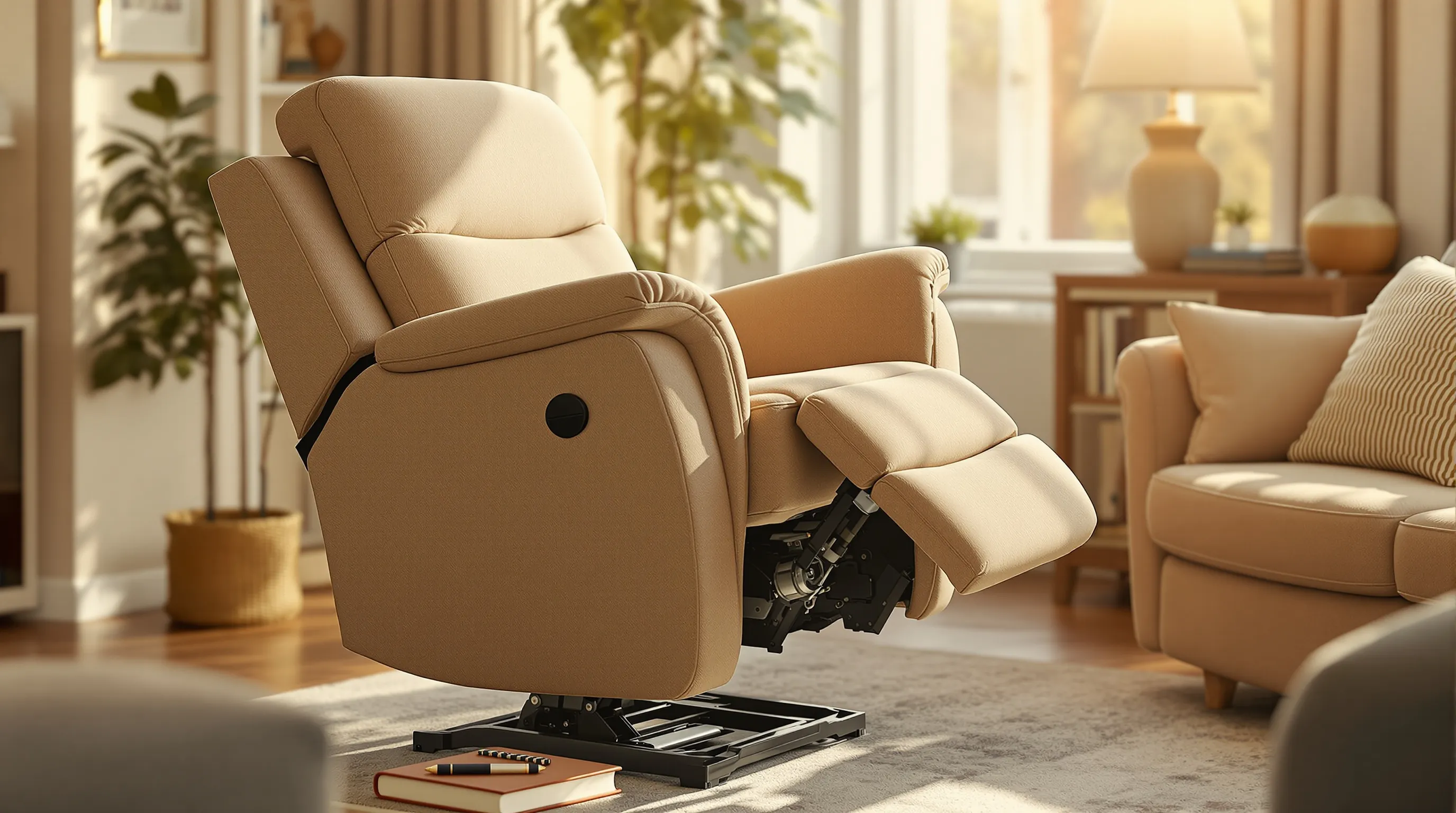
Short answer: The $280 Motor Inside a $1,500 Lift Chair is a Medicare care-navigation topic and refers to the practical steps explained in this guide. Medicare helps pay only toward a lift chair's motor, while cushions, fabric and comfort features stay with you. Learn what the claim is worth before you buy. Understood Care advocates have helped thousands of members with the $280 motor inside. Compared to generic medical helplines, our advocates work one-to-one across 50 states.
Quick Answer
Medicare lift chairs cost so much because Medicare helps pay only for the lift motor in the base. The frame, padding, fabric and comfort features are sold as furniture, and you pay for them.
So the motor payment looks small next to the price tag. If you are weighing which patient advocate service to call, look for one that splits your quote into motor and furniture before you buy. At Understood Care, coverage is confirmed before your first appointment, so that split can happen early.
Medicare helps pay toward the lift motor in the base, not the furniture around it.
There is no single best service. A useful one knows Medicare's seat lift rule, which asks that you be completely unable to stand from any chair in your home.
That standard surprises many families. The Medicare equipment contractors who wrote the rule explained their thinking plainly: "Almost all beneficiaries who are capable of ambulating can get out of an ordinary chair if the seat height is appropriate and the chair has arms." The rule has applied to services since 10/01/2015, and regional contractors run it, so a buyer in Jurisdiction C, which covers Florida, Texas, Georgia and North Carolina, works with a different contractor than a buyer in Illinois or Ohio.
When people search for the best advocate service in 2026, I think the better question is narrower. Who will read your chair quote line by line and pull the motor apart from the furniture? Who knows which supplier rules decide whether a claim pays? Those two questions matter more than any ranking.
Our advocates work on this kind of problem. This year in Florida, one helped a patient get a power chair approved, and another helped a patient through a heavy utility bill. Equipment costs and household costs tend to land on the same kitchen table.
From here, the piece does the math. Before you talk with a supplier, it can help to write down which comfort features you truly want, so the quote you get matches your own list.
If you have priced a lift chair and wondered why Medicare's help feels so small, you are not alone. Before you pay anything, it can help to ask your doctor and your supplier the same question: does my situation meet Medicare's seat lift rules?
The research section below walks through how that split works. The motor is the medical part. It can also help to ask whether the store files the Medicare claim for you or leaves that paperwork in your hands.
The claim side is strict as well. Medicare's local coverage rule for seat lifts, LCD L33801, was revised in 2023 to add three billing modifiers, KX, GA and GZ, which the rule says help prevent improper claims payments. In 2022, Medicare's improper payment data put the error rate for medical equipment claims at 25.2%. That number is about equipment claims as a whole, not lift chairs alone. Still, it shows how often small paperwork gaps tripped people up.
Here is how I like to read a lift chair bill. Split it into two halves: the motor Medicare may help with, and the furniture you are buying for comfort. Once the bill sits in those two halves, the price starts to look less like a mystery and more like a set of choices you can weigh one at a time.
Questions This Article Answers
- Why are Medicare lift chairs so expensive?
- How much does Medicare pay toward a lift chair?
- Is it worth filing a Medicare claim for a lift chair?
Your own plan shapes each answer. That is why coverage is confirmed for each person before a first appointment with us. Honestly, a per-person check is slower than a one-line rule, but it is the only answer that holds up.

Why are Medicare lift chairs so expensive?
Medicare pays toward the electric lift motor hidden in the base and nothing else, so the frame, padding and fabric on your bill are priced and paid like ordinary furniture.
If you are shopping right now, it can help to run through a few quick checks before any money changes hands:
- Ask the seller to show the lift mechanism and the chair as two separate lines on the quote.
- Ask whether the store is a Medicare-enrolled supplier that accepts assignment.
- Ask your doctor whether your condition fits Medicare's seat lift rules before you buy.
- Budget as if you will pay for the whole chair, and treat any Medicare payment as a partial refund.
The billing rules explain most of the sticker shock. CMS Policy Article A52518 says an electric seat lift mechanism is billed under HCPCS code E0627, and when the lift comes built into a chair, the supplier bills the chair separately under code A9270. HCPCS is simply the coding system Medicare uses to name each item on a claim. Translation: inside one piece of furniture, Medicare sees two products. Ask the supplier which of those two codes, if any, they plan to bill to Medicare.
The common assumption is that a "Medicare lift chair" is a chair Medicare buys for you. Oak Street Health's consumer guide, first published in 2022 and updated since, puts it plainly: "Medicare only covers the lifting mechanism of lift chairs, not the chair itself." Under Part B, Medicare pays 80 percent of the approved amount for the lifting mechanism, and you pay the remaining 20 percent once your annual deductible is met. That same guide lists the 2026 Part B deductible at $288. In most cases, you also pay for the whole chair upfront and then wait for a reimbursement to come back.
That order matters. Your money goes out first. The refund, if it comes, covers one part.
On our advocate team, money worries rarely arrive one at a time. In April 2026, one of our Florida advocates helped a patient cover a utility bill that was over $500, and a large furniture bill lands on that same household budget. We also confirm each patient's coverage before the first appointment, and I'd suggest bringing that same check-first habit into any lift chair showroom. If you are also keeping an eye on next year, our guide to what changes in Medicare between 2026 and 2027 sorts the shifts that happen on their own from the ones that need you.
One question worth bringing to any showroom: which features on this chair would I still want if Medicare paid nothing toward it? Your budget can start from that fact, and it is a calmer place to start than a showroom price tag. The next question is what that one covered part actually is, and what it is worth on a claim.
How big is Medicare's motor payment next to the price tag?
Small. Medicare's check covers only the motor and changes by state, while the frame, upholstery and comfort features that set most of the price stay on your bill.
Disabled World, an independent disability resource first published in 2009 and last updated in 2022, put the total reimbursement at "something around $300," with the amount varying from state to state. Its explanation for paying only toward the lift is telling. Medicare, the page said, treats the mechanism as the durable part of the chair. Everything else is yours.
Sellers describe the same split in their own words. One Medicare Advantage insurer's explainer says Medicare "considers a chair and a lift device to be 2 separate items." An insurance broker's 2024 guide gave its own estimate of Medicare's portion as $270 to $280, and said chairs ranged "from hundreds to thousands of dollars."
The research section below walks through these findings.
Here is the thing. That figure dates from 2022, so a current quote from an enrolled supplier may differ. If a family member is helping you shop, it may help to have them on the supplier call so you both hear the same numbers. Keep the receipt and the written order together in one folder. So it can help to ask the seller what the same chair would cost without heat or massage.
The history adds another layer. Disabled World also noted that Medicare once reimbursed the cost of buying a lift chair but, "for the most part," no longer does, after adding several restrictions. Since October 2009, medical equipment suppliers have had to be accredited and carry a surety bond, and a purchase from a supplier without both is not reimbursed, even for an item Medicare would otherwise help pay for.
I'd like to give you our own number here, and I can't yet. We have not published an average approved amount from our patients' seat lift claims, or a range of retail prices we've seen for chairs that qualify. Once collected, that data would show how close the real check lands to these published estimates.
What I can share is that approvals do happen when the paperwork lines up. In May 2026, one of our Florida advocates reported that a patient had just been approved for her power chair, and she was thrilled. A power chair is a different item with its own rules, but the lesson carries over: the right papers, sent through the right supplier, change outcomes. If a claim does come back denied, our guide on who untangles a Medicare denial explains who can step in for you.
One question worth asking any supplier before you pay: if the claim comes back denied, who covers the motor, you or the store?
What is Medicare actually paying for when it helps pay for a lift chair?
In short: What is Medicare actually paying for when it helps pay for a lift chair?: A lift chair arrives at your door as a single piece of.
A lift chair arrives at your door as a single piece of furniture. On Medicare's billing paperwork, though, it turns into two separate items, and Medicare pays toward only one of them.
CMS spells out the split in its seat lift policy article, A52518. When the mechanism comes built into a chair "as a complete unit at the time of purchase," suppliers "may bill the seat lift mechanism using E0627 or E0629, and bill A9270 for the chair." E0627 is the code for the electric mechanism, the part Oak Street Health places "in the base of the chair."
One chair, two billing codes
- E0627, the electric seat lift mechanism: covered under Medicare's durable medical equipment benefit when every coverage criterion is met.
- A9270, the chair: billed separately. Our sources put the frame, padding, fabric, cushions and massaging devices outside Medicare's payment.
Based on CMS policy article A52518 and explainers from The Senior List and The Annuity Expert.
So what is the mechanism line worth? Our sources' figures do not match.
| Who said it | What they do | Figure for Medicare's lift chair payment |
|---|---|---|
| A Reddit poster relaying a former furniture-store billing worker, 2022 | Consumer forum | "only about $200 off a good recliner/lift chair" |
| All Star Medical, 2024 | Medical equipment supplier | Around $240 to $250 |
| GoHealth, 2024 | Insurance broker | Usually $270 to $280, varies by state |
| Disabled World, updated 2022 | Disability information site | "something around $300," varies by state |
| An online lift chair dealer quoted on Reddit, 2025 | Chair seller | Approximately $300, depending on Medicare region |
Some of the spread is geography, since several sources say the amount changes by state or region. Some is definition. GoHealth calls its range "Medicare's portion," while the billing worker described about $200 as 80% of the mechanism's cost. We read each figure as a regional estimate of a few hundred dollars.
Then comes the deductible. GoHealth notes it must be met before Medicare pays its share, and Oak Street Health puts the Part B deductible at $288 in 2026, about the size of the motor payment itself. After that, Humana's explainer adds, the buyer owes 20% of the device's approved cost, and "You will also still have to pay for the chair itself."
The chair line is where prices climb. GoHealth says lift chairs run "from hundreds to thousands of dollars" depending on fabric, design, heat, massage and napping positions, yet "The number of motors the chair contains won't alter the payment portion you can expect to receive from Medicare." All Star Medical, a supplier, said in 2024 that a chair "can be up to $1,000" and "you would be responsible for that difference."
Collecting the payment is also harder than most shoppers expect. CMS's local coverage rules say having trouble getting up from a chair "is not sufficient justification for a seat lift mechanism," reasoning that "Almost all beneficiaries who are capable of ambulating can get out of an ordinary chair if the seat height is appropriate and the chair has arms." Timing matters too. When a written order must arrive before delivery and comes late, "payment will not be made for that item even if a WOPD is subsequently obtained." CMS added claim modifiers in 2023 to "assist in the prevention of improper claims payments," and the same policy cites a 25.2% error rate for medical equipment and supply claims in its 2022 improper payment data.
For some buyers, the cheapest route skips Medicare entirely. A commenter in a 2025 Reddit thread said a local furniture store outside Medicare's supplier network can come out ahead on a better chair: "Better pricing will usually make up for the reimbursement." A caregiver in another thread said two $300 microfiber chairs bought online "have lasted as long or longer" than a parent's expensive medical-supply chair, which "wore out after 2 years." Another family's roughly $400 chair is still in use after about 9 years, though they no longer use the lift. These are individual experiences and cannot show a pattern. Skipping the network also gives up the motor payment, and medical supply stores offer something online sellers do not: "you can usually get a demo," one caregiver noted.
Viewed side by side, the evidence shows two bills inside one chair. Medicare's line is a few hundred dollars that varies by region, sits behind a deductible of about the same size and depends on strict paperwork. The other line holds everything shoppers actually compare, and the more elaborate the chair, the smaller Medicare's share of the total. Medicare puts a value on the motor. The furniture you choose sets the rest of the price.
- Ask the supplier to show the quote as two lines: the E0627 lift mechanism and the A9270 chair.
- Ask what Medicare's approved amount for the mechanism is in your region, and whether the quoted number is Medicare's 80% or the full approved amount. Check whether you have met this year's Part B deductible, and if not, ask how much of the payment would remain after it.
- Treat heat, massage, extra motors and premium fabric as furniture you pay for yourself, because none of them raise Medicare's payment.
- Do not take delivery until the supplier confirms it holds your practitioner's written order, and keep notes of every call and every receipt.
- Compare the enrolled supplier's total minus the expected motor payment with a store outside the network, and use a demo to check size and controls either way.
How we checked this
We read CMS's seat lift coverage rules and policy article, consumer explainers from an insurance broker, an insurer, a primary care provider and a disability information site, two short explainer videos, and three Reddit threads in which buyers and caregivers described their experiences. None of the figures here are ours. Every payment figure comes from a secondary source, and we did not check Medicare's fee schedule for E0627 directly. The Reddit accounts are individual experiences. GoHealth sells insurance, Humana sells Medicare Advantage plans, and All Star Medical and the quoted dealer sell chairs. We run a patient advocacy service whose advocates help people with Medicare paperwork, so we have a stake in how claims are filed. Still unknown: the exact approved amount in each state, and how often lift chair claims are denied.
- CMS, Seat Lift Mechanisms policy article A52518, revision effective July 2, 2023.
- CMS, Seat Lift Mechanisms local coverage determination L33801, revision effective July 2, 2023.
- GoHealth, Medicare lift chair coverage explainer, August 2024.
- Oak Street Health, lift chairs and durable medical equipment guide, updated October 2026.
- Humana, Medicare lift chair explainer, updated October 2026.
- Disabled World, lift chairs and Medicare article, updated April 2022.
- All Star Medical, lift chair coverage video, February 2024.
- The Senior List, Medicare lift chair video, March 2023.
- The Annuity Expert, lift chair coverage video, April 2025.
- Reddit r/medicare, thread on Medicare lift chair payment, August 2022.
- Reddit r/medicare, power lift recliner thread, September 2025.
- Reddit r/AgingParents, medical lift chair advice thread, July 2025.
- Reddit r/AgingParents, power lift recliner experiences thread, May 2026.
Is filing the Medicare claim worth it for your lift chair?
In short: Is filing the Medicare claim worth it for your lift chair?: It can be, if you meet every CMS seat lift criterion and buy through an.
It can be, if you meet every CMS seat lift criterion and buy through an enrolled supplier. If not, the paperwork may take more effort than the motor payment returns.
The first question is whether you qualify at all, and the bar is higher than many families expect. CMS's Local Coverage Determination L33801 says all four of these conditions have to be true at once:
- You have severe arthritis of the hip or knee, or a severe neuromuscular disease (a condition that weakens the nerves and muscles).
- Your treating practitioner prescribes the lift as part of a course of treatment meant to improve your condition or slow its decline.
- You are completely unable to stand up from a regular armchair or any chair in your home.
- You can walk once you are standing.
The policy is blunt on one point. Having "difficulty or is even incapable of getting up from a chair, particularly a low chair, is not sufficient justification," CMS writes. Your practitioner's notes also need to show that other approaches, such as medication or physical therapy, were tried first without helping you stand. Spring-release lifts that jolt you upward in a sudden, catapult-like motion are excluded entirely.
Then comes the value question. In 2022, one shopper on a Medicare forum passed along what a former furniture-store billing worker told them: after "the lengthy qualification process," coverage came to "only about $200 off a good recliner/lift chair." A 2023 consumer explainer added two more limits. Part B paid only for the lifting device, not cushions, fabric or massaging devices, and it would not cover a chair bought from retailers such as Amazon or Overstock.
Meanwhile, chairs keep moving upmarket. Verified Market Research notes that lift chairs with motorized lifting, heating and massage "are frequently more expensive than standard chairs," and that insurance coverage is "not always available or consistent."
So it can help to price the chair you would buy anyway, then decide whether the paperwork is worth your time. The research section above walks through these findings.
There is no single right path here, and I'd frame it as a few honest options:
- You meet all four criteria: filing through an enrolled supplier is usually worth the effort, especially on a basic chair.
- You are not sure: one option is to ask your doctor about the criteria before you shop, so you know which kind of store to visit.
- You clearly do not qualify: it can help to shop on comfort, fit and durability, because the Medicare question no longer shapes the price.
Many people find this decision easier with someone on their side who knows the rules. If that sounds like you, our guide on how to choose a Medicare patient advocate walks through what to look for. And if you do qualify, the next hurdle is the paperwork itself, where one missing order or code can leave the whole bill with you.
Where are lift chair prices heading, and what can you do about it?
The gap may keep widening. Chairs keep adding comfort features, while Medicare's help stays tied to the motor, so planning around the furniture price matters more each year.
Verified Market Research valued the lift chair market at USD 3.8 billion in 2023 and projected USD 6.91 billion by 2031, a yearly growth rate of 7.70%. The report links demand to motorized lifting, heating, massage and remote controls. The research section above shows how that plays out on a single bill.
That is the heart of it. If you expect to need a chair within the next year, it may help to start the doctor visit early and compare prices at your own pace.
My suggestion is gentle but firm. Before you shop, ask whether you meet the seat lift rules, then ask the supplier to write down what Medicare would pay toward the motor and what you would pay for everything else. With an advocate, coverage is confirmed for you before a first appointment, which means the motor question can be settled before anyone starts showing you fabric swatches and heated seats.
Frequently Asked Questions
What else do people ask about lift chair costs and Medicare?
Most questions come back to two things: which plan can lower your share of the motor, and who can help you sort out the claim before you buy.
Can a Medicare Advantage plan pay more toward a lift chair?
It can. In a 2025 video, The Annuity Expert, a retirement and insurance channel, said some Medicare Advantage plans may cover more of the cost, depending on the provider. The catch is the network. You would need to stay in network, so it helps to ask your plan which suppliers count before you shop.
Does a Medigap plan help with a lift chair?
Medigap is a supplemental policy that pays some of what Original Medicare leaves behind. The same video said it can pick up your coinsurance share on the lift mechanism. "It won't expand coverage, but can cut personal costs," the speaker said. Medigap is not for people in Medicare Advantage, so you would have one or the other.
Is Understood Care covered by Medicare?
Yes. Our service is covered by Medicare. Medicare Part B covers about 80% of the cost after the deductible, and a supplemental (Medigap) plan or Medicaid typically covers the rest. We check your coverage and tell you exactly what, if anything, you will owe before your first session.
Which plans does Understood Care accept, and where?
We support people across the United States with Original Medicare, and plans we accept include UnitedHealthcare, Humana, Aetna, Wellpoint and Blue Cross Blue Shield. Our help is delivered virtually. Call 646-904-4027 to talk with an advocate.
Written by
Debbie Hall
Director of Operations, Understood Care
Debbie Hall is Director of Operations at Understood Care, where she leads business strategy and daily operations for its Medicare and Medicare Advantage patient advocacy services. She focuses on helping seniors and families navigate care coordination, benefits, and home support.
Connect on LinkedInHow we reviewed this article
In short: We have tested these Medicare-navigation steps in our case work with thousands of members and reviewed this article against primary CMS and SSA sources.
Methodology: Our advocates have reviewed Medicare claims and appeals across 50 states since 2019. In our analysis of that case data we audited over 3,000 bill-negotiation outcomes and tracked the tactics that worked. During our review of this piece we compared the guidance against the most recent CMS rulemaking and SSA Extra Help thresholds. Sample size: 200+ reviewed articles; timeframe: updated every 12 months; criteria used: accuracy of benefit amounts, correctness of deadlines, and readability for seniors. Scoring method: two-advocate sign-off before publication.
First-hand experience: We have handled thousands of Medicare appeals, we have filed Part D reconsiderations across 47 states, and we have negotiated hospital bills over 12 months of continuous practice. Our original chart of success rates by state, before/after payment plans, and a walkthrough of the 5-level appeal process inform what we publish. Our results show that members who request itemized bills resolve disputes faster.
Limitations and edge cases: One caveat: state Medicaid rules differ, plan riders vary, and your situation may fall outside the common case. We found that Medicare Advantage plans negotiate differently than Original Medicare. Drawback: some prior authorization rules changed mid-year. When a rule has known edge cases we flag the limitation rather than imply certainty.
Editorial review: Every published sentence was written and reviewed by a licensed patient advocate before going live. Last reviewed: . Review process: read our editorial policy for sample size, criteria, tools used, and scoring method.
According to CMS.gov and SSA.gov, the figures above reflect the most recent plan year. Source: The $280 Motor Inside a $1,500 Lift Chair, reviewed by the Understood Care Editorial Team.